A truck wash for sale comes with a story. The story is almost always the same: good site, loyal fleet customers, owner is retiring, revenue would be higher if somebody young and hungry ran it. Sometimes the story is true. More often it is a reasonable description of what the business used to be, or what the seller believes it could become in someone else’s hands.
Your job as a buyer is not to disprove the story. It is to replace it with numbers you can verify independently — and to find, before you close, the three or four things that will cost you real money in year one.
We build washes from bare dirt, and we audit washes that are already running. Acquisition sits between those two jobs, and it carries risks that neither a new build nor a routine audit fully covers. You are inheriting equipment you did not specify, a customer base you did not earn, and a regulatory position you did not negotiate. Here is how to find out what you are actually buying.
Start With the Revenue You Can Prove
Every seller can produce a profit and loss statement. Fewer can produce records that independently corroborate it, and the gap between those two things is where most bad deals hide.
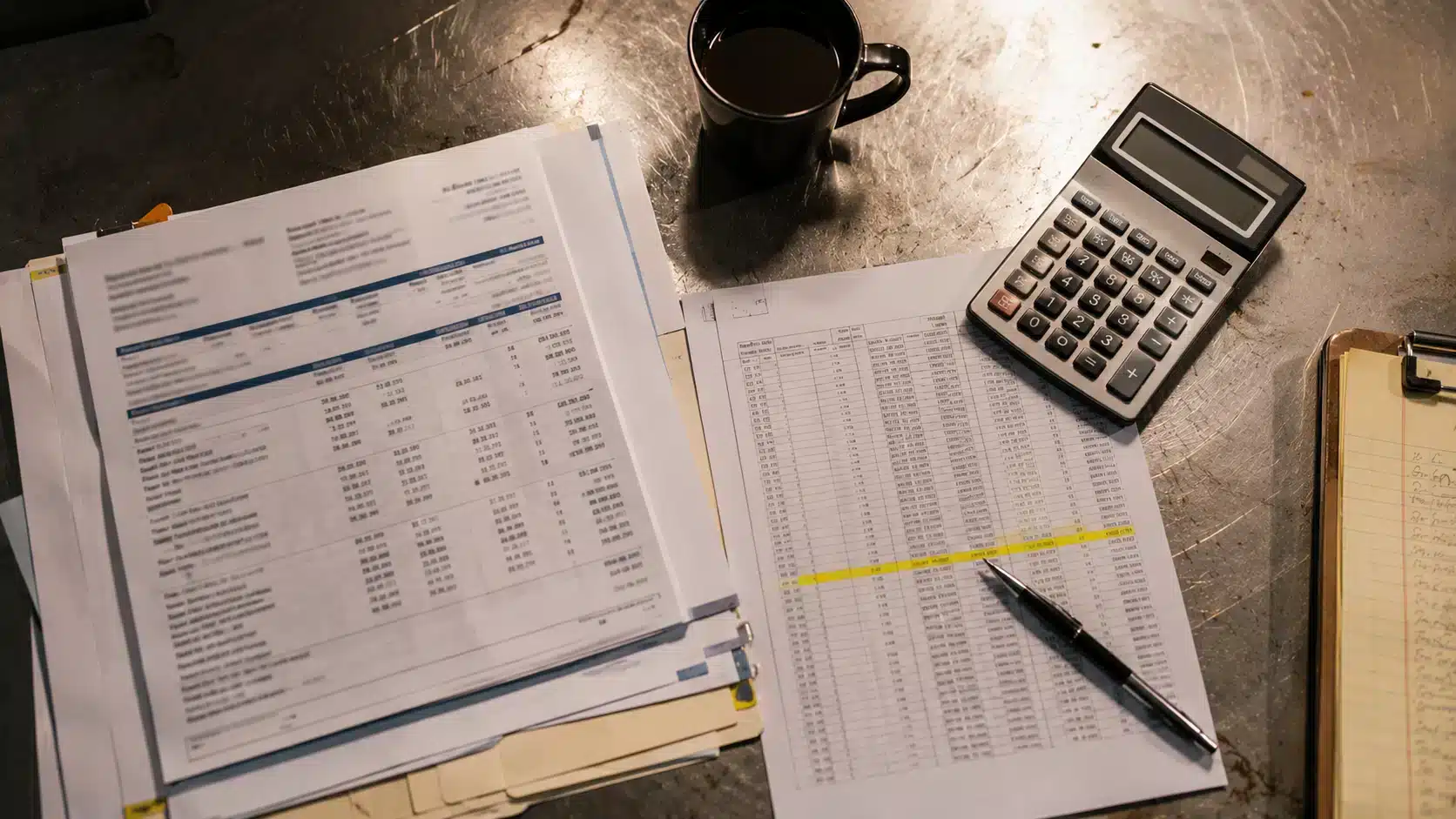
Ask for three years of tax returns and three years of P&Ls, but treat those as the claim, not the evidence. The evidence is:
Wash counts from the controller or point-of-sale system. Modern wash systems log every cycle. Export the raw data — not a summary the seller typed up — for at least twenty-four months. You want daily counts, not monthly totals, because daily counts show you the shape of the business: whether volume is concentrated in a few weekday mornings, whether weekends are dead, whether there was a step change eighteen months ago that nobody mentioned.
Twenty-four months of bank statements. Deposits are hard to fabricate. Match monthly deposits against reported revenue. Small discrepancies are normal. A pattern of reported revenue exceeding deposits is not.
Utility bills. Water and electric consumption track wash volume almost linearly. If the seller claims 4,000 washes a month and the water bill supports something closer to 2,500, you have found a problem without needing the seller’s cooperation to find it. This is the single most useful cross-check available to a buyer, and it costs nothing but a records request.
Chemical purchase invoices. Same logic. Chemistry is consumed per wash. Twelve months of invoices from the supplier, divided by the wash count, tells you two things at once — whether the volume claim is real, and whether the site is running efficiently.
If a seller resists producing raw system data and utility bills, that resistance is information. There is no legitimate confidentiality reason to withhold a water bill from a buyer under NDA.
Find Out Whose Customers They Are
This is the risk that sinks more wash acquisitions than equipment failure, and it rarely appears in the offering memorandum.
Retail truck wash volume — owner-operators pulling off the interstate — belongs to the location. It will still be there after you close. Fleet volume is different. A regional carrier washing forty trucks a week may be doing so because the outgoing owner has known the terminal manager for fifteen years, quotes him a rate that was set in 2019, and answers his phone on Sunday.
For every fleet account, establish:
- What percentage of total revenue it represents
- Whether there is a written agreement, and if so, its term, renewal terms, and cancellation notice
- What rate they pay versus your posted rate
- Who at the carrier makes the decision, and whether you can meet them before closing
A site where the top three accounts represent sixty percent of revenue and none of them are under contract is not a stable business. It is a business with a ninety-day fuse. That does not necessarily mean walk away — it means the price should reflect the risk, and the deal should include a transition period where the seller introduces you and stays reachable.
Where contracts do exist, read the assignment clause. Some fleet agreements do not survive a change of ownership without the customer’s written consent, which hands your largest accounts a free option to renegotiate the day you take over.
Read the Chemical Line
Chemistry is usually the largest controllable operating expense at a truck wash after labor, and it is the line where a new owner most often finds immediate money.
Take twelve months of chemical invoices and divide total spend by verified wash count. Compare that number against what the site should be spending given its water hardness, soil profile, and process. A well-run touchless operation holds chemical cost per unit to a low single-digit dollar figure. Sites we audit routinely come in well above that, and the causes are consistent:
- Dosing set high years ago to compensate for a mechanical problem that was later fixed, and never turned back down
- Worn or partially blocked nozzles producing poor coverage, prompting operators to compensate with more product
- A supply agreement signed with the equipment purchase and never re-quoted since
- Chemistry mismatched to local water — a presoak fighting hardness it was never formulated for
A gap here is not a reason to avoid the deal. It is often the most reliable value creation available to a buyer, because it requires no capital and no new customers. But you need to identify it during diligence, because the seller will price the business on current earnings, and you should not pay a multiple on savings you are the one creating.
Inspect the Equipment Like You Have to Run It Monday
Because you do. Bring someone who works on wash systems for a living, not a general commercial building inspector.
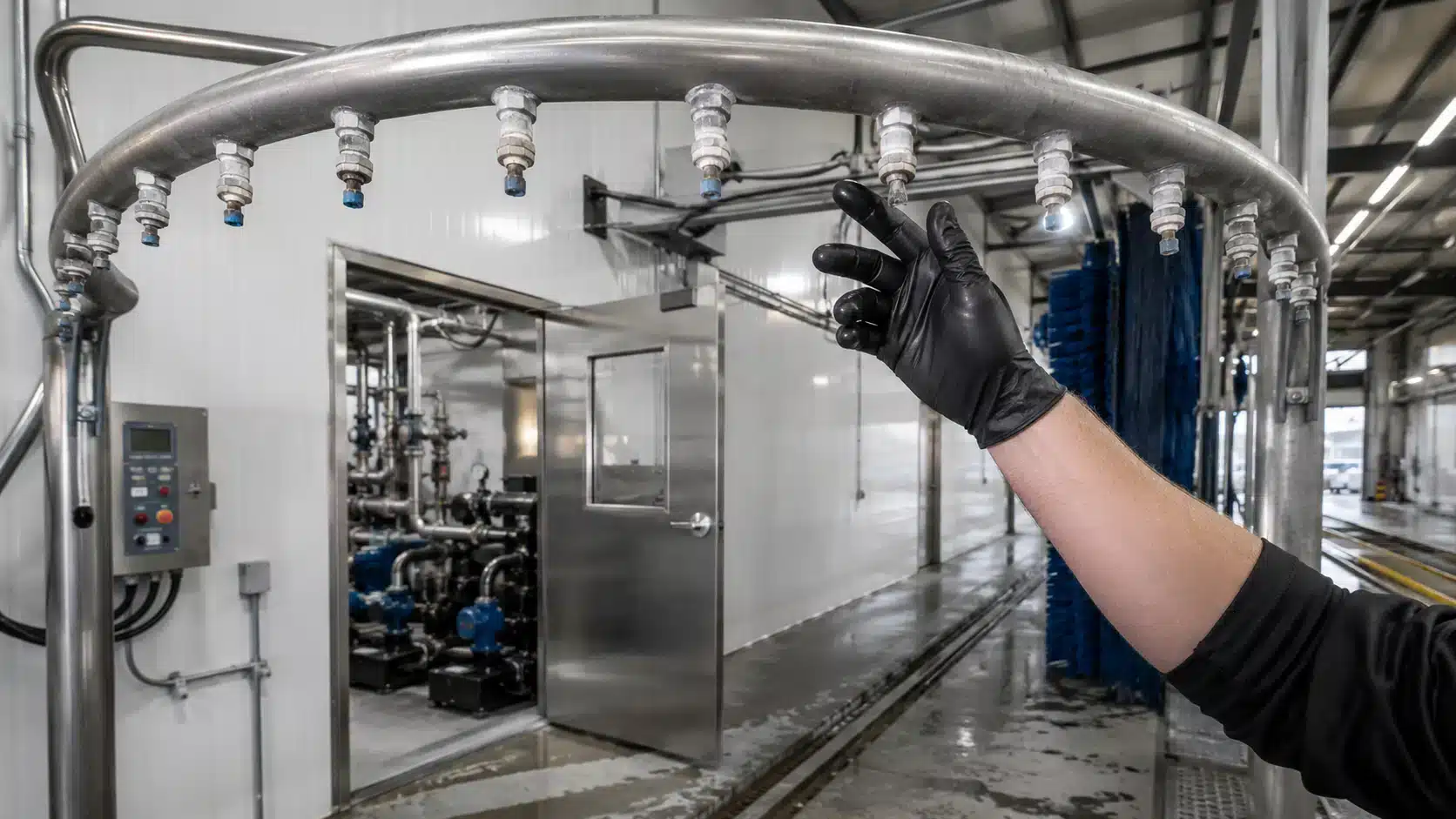
Wash system. Establish the manufacturer, model, and year, whether it is touchless or friction, and whether parts and service are still available. An orphaned system from a manufacturer that no longer supports it can be functional on inspection day and unrepairable six months later. Check nozzle condition and spray pattern across the entire arch, arm travel and alignment, sensor and profiling function, and gearbox and bearing noise.
Pump room. Pumps, motors, and VFDs have finite lives. Ask for the service and parts history. A site with no maintenance records is a site that has not been maintained, whatever the seller says. Look for the tell-tales: mineral scale, corroded fittings, temporary repairs that became permanent, a floor drain that suggests a leak nobody logged.
Water systems. Softener, RO membrane, reclaim tanks, and separator all have consumable components with real replacement costs. Membranes and resin beds are consumables that get deferred when cash is tight, and deferral is invisible until performance falls off.
Air, heat, and freeze protection. In any market that sees a hard freeze, freeze protection is not optional and its failure is expensive. Verify how the site is protected and when it was last tested.
Build a capital replacement schedule from this inspection — what needs replacing in year one, year three, and year five, with dollar figures. That schedule belongs in your offer. If the wash system has three years of useful life remaining and a full replacement runs into six figures, that is not a maintenance item. It is a hidden component of the purchase price.
Verify the Regulatory Position
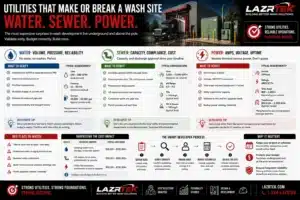
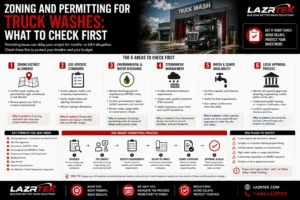
Wash facilities discharge industrial wastewater, and the terms under which they are allowed to do so are site-specific, jurisdiction-specific, and not automatically portable to you.
Get the current discharge permit and read it. Note the expiration date, the discharge limits, the monitoring and reporting requirements, and any compliance history. Then call the local pretreatment authority and ask two questions: does this permit transfer on change of ownership, and are there any pending changes to the limits or requirements for this class of facility?
Ownership transfer is a common trigger for a fresh look by the authority. A site that has been operating for two decades under grandfathered terms may face updated separator sizing, added monitoring, or tighter limits at the moment you take over. Better to learn that from the regulator during diligence than from an enforcement letter in month four.
Ask separately about the oil-water separator: capacity, last pump-out, service records, and whether it is sized for current and projected volume. Also confirm the sewer surcharge structure, which in many municipalities is billed on measured strength of discharge and can be a meaningful, and rising, line item.
Look at the Site the Way a New Customer Would
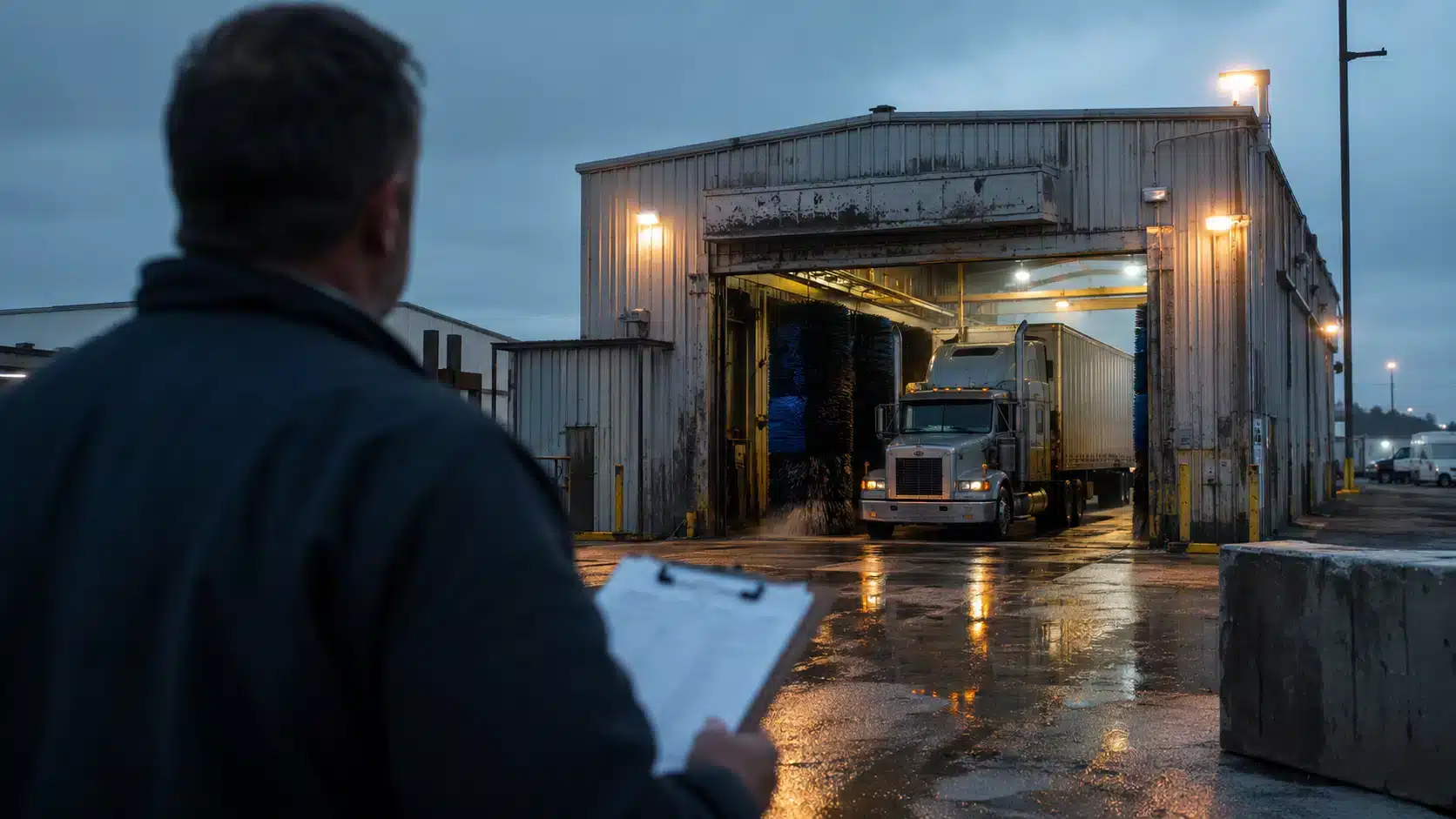
Some of the most valuable diligence is the least technical. Sit in a truck cab at the entrance during the morning rush.
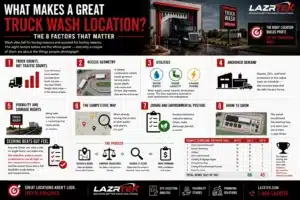
Can a 75-foot combination enter, queue, and exit without blocking the road? Is there stacking room for three or four units, or does the second truck in line back up onto the highway? Are the approach and exit visible and obviously signed from the corridor, or does a driver need to already know the site is there? Is the lot lit well enough that a driver will stop at 4 a.m.?
Then check the digital front door. Search the way a driver would — the city, the corridor, “truck wash near me.” Where does the site rank? How many Google reviews does it have, what is the rating, and when was the last one? Many older washes have strong physical positions and effectively no online presence at all, which is a genuine upside case — but only if you have quantified how much volume it might represent rather than assuming it.
Deciding What to Pay
Two anchors matter, and you should calculate both.
The first is earnings. Small owner-operated truck washes commonly trade on a multiple of verified discretionary earnings, most often in the two-to-four range, with the top of that band reserved for facilities with contracted fleet revenue, newer equipment, and a clean regulatory file. Apply the multiple to earnings you have verified, not earnings the seller has asserted, and adjust for owner compensation and any personal expenses running through the business.
The second is replacement cost. What would it cost you to acquire comparable land on that corridor and build the same facility new, with current-generation equipment and a fresh permit? If the asking price is close to that figure, the deal is difficult to justify: you would be paying new-build money for used equipment, inherited regulatory terms, and someone else’s maintenance decisions. If it sits well below replacement cost, that discount is the real reason to buy an existing site rather than build one. And if you are financing the purchase, expect your lender to test the same assumptions you are testing — the documentation a wash loan package needs is largely the documentation you should be demanding from the seller anyway.
Then subtract the capital replacement schedule you built during the equipment inspection. Deferred maintenance is a liability you are assuming, and it belongs in the price, not in your first-year surprise column.
When to Walk
Some findings should end the conversation rather than start a negotiation:
- Reported revenue that cannot be corroborated by deposits or utility consumption
- An orphaned wash system with no parts or service support
- A discharge permit that will not transfer, or a pretreatment authority signaling required upgrades of unknown scope
- Environmental findings on the site, particularly involving fuel storage or historical uses
- Top accounts unwilling to speak with you before closing
The honest answer in wash development is sometimes “don’t build.” It is just as often “don’t buy this one.” A study that costs a few thousand dollars and tells you to walk away has done more for your returns than one that tells you what you wanted to hear.
Frequently Asked Questions
How do you value an existing truck wash?
Most small commercial truck washes trade on a multiple of verified seller’s discretionary earnings, commonly two to four times for owner-operated sites, with higher multiples where fleet revenue is contracted and equipment is current. Always cross-check against replacement cost — the price of comparable land plus a new build. If the asking price approaches replacement cost, you are paying new-build money for used equipment.
What financial records should I request?
Three years of tax returns and P&Ls, twenty-four months of bank statements, the raw wash-count export from the controller or POS, twelve months each of chemical invoices, water and sewer bills, and electric bills, all fleet agreements, the full service and parts history, and the current discharge permit. Deposits and utility consumption are the hardest records to manipulate.
Do truck wash permits transfer to a new owner?
Not automatically. Industrial discharge permits are typically issued to a named operator and often require notification, reapplication, or inspection on transfer. Some jurisdictions use the change of ownership to update limits or require an upgraded separator. Confirm the process with the local authority and make the permit a condition of closing.
What is a normal chemical cost per wash?
A well-dosed touchless truck wash generally holds chemistry to a low single-digit dollar figure per unit, varying with water hardness, soil load, and process. Spend well above that usually points to over-dosing, worn nozzles, a failing dosing pump, or an above-market supply agreement — and is often the fastest margin recovery available to a new owner.
What is the biggest hidden risk in a truck wash acquisition?
Uncontracted fleet revenue. A site can look profitable while depending on two or three carriers washing on a handshake with the retiring owner. Verify what share of revenue each account represents, what is in writing, and whether the relationship transfers.
Considering an acquisition? A LazrTek wash business audit can be run on a site you are buying, not just one you own — verified wash counts, chemical cost per unit, equipment condition and remaining life, and a prioritized capital schedule you can take into the negotiation.
For a structured review of earnings, physical condition, and expansion potential, use the truck wash acquisition guide.