How to Win Fleet Contracts for Your Existing Wash
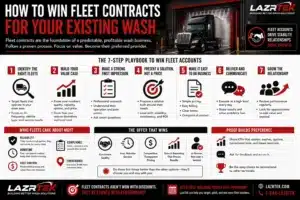
Every wash owner wants fleet contracts; almost none run a process to get them. The accounts go to whoever shows up with a professional offer — and showing up is a system, not a personality trait.
Home / Consulting / Wash Business Audit
For Existing Operators
A truck wash business audit reviews how an existing wash earns revenue, uses resources, and serves customers. It examines operating records and site conditions to identify questions around pricing, chemical usage, labor, equipment uptime, and demand. Recommendations should distinguish measured findings from assumptions and estimated opportunities.
Sound Familiar?
Scope
| Area | What we measure |
|---|---|
| Revenue & pricing | Ticket mix, price vs. market, membership/contract structure |
| Throughput | Cycle times, queue behavior, trucks per hour vs. rated capacity |
| Chemistry | Cost per wash, dilution and dosing accuracy, chemistry-to-soil match |
| Labor | Staffing model vs. volume, training gaps |
| Equipment | Condition, maintenance history, downtime cost |
| Digital presence | Local SEO rankings, reviews, app/loyalty, competitor visibility |
| Fleet pipeline | Contract coverage of nearby depots and distribution centers |
Process
P&L, chemical invoices, POS data, and utility bills reviewed remotely under NDA.
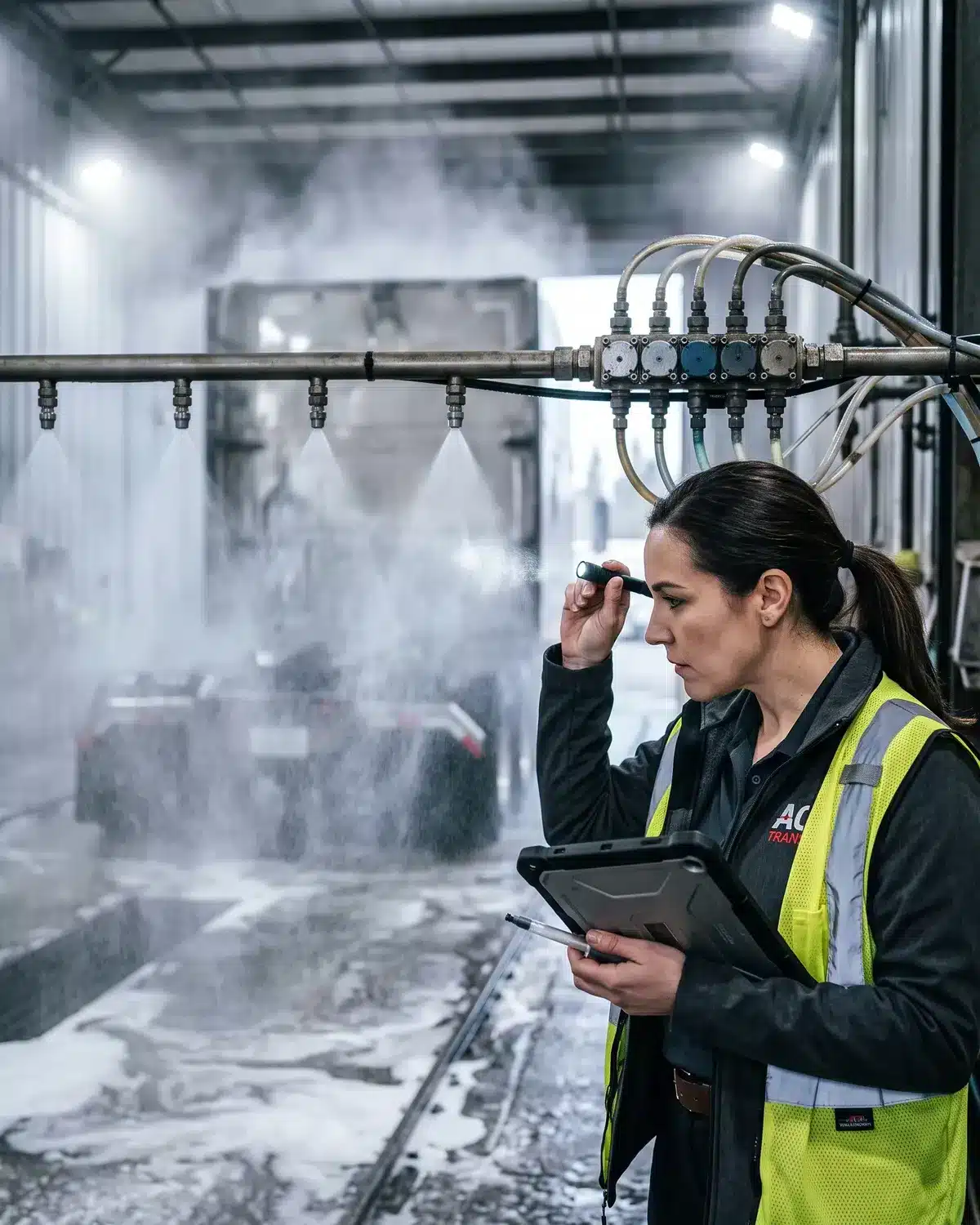
1–2 days on-site: timed cycles, dosing checks, equipment inspection, mystery-shop of your digital funnel.
Written findings, ROI-ranked action list, benchmarks, and a live review call.
Proof
The audit found what audits usually find: dosing running rich, pricing below the market, and throughput trailing the equipment’s rated capacity. Recalibration, a price restructure, and a fleet outreach plan turned the numbers around within one quarter.
Straight Answers
A structured review of an operating wash facility — revenue and pricing, throughput and cycle times, chemical cost per wash, labor model, equipment condition, and online visibility — that identifies where profit is being lost and what each fix is worth.
Typically two to four weeks: remote data review first, then a one-to-two-day site visit, followed by the written report and a review call.
A written report with findings, a prioritized action list ranked by projected ROI, benchmark comparisons against similar facilities, and a live review call to walk through the plan.
Flat fee, quoted after the free consultation based on facility size — and credited toward any LazrTek upgrade or marketing project you proceed with.

Every wash owner wants fleet contracts; almost none run a process to get them. The accounts go to whoever shows up with a professional offer — and showing up is a system, not a personality trait.

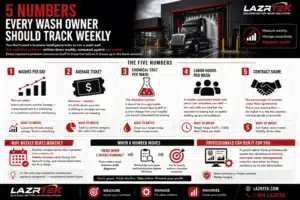
You don’t need a business intelligence suite to run a wash well. You need five numbers, written down weekly, compared against last month. Every expensive problem announces itself in these five before it shows up in the bank account.
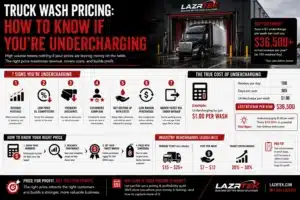
Raising prices frightens operators more than any other lever — and it’s usually the lever with the most money behind it. The fear is losing volume; the math almost always says otherwise.
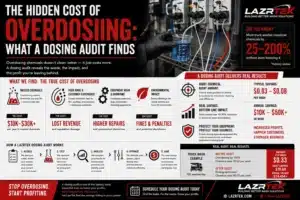
Use a dosing audit to compare measured chemical consumption, actual wash volume, and cleaning results before changing a wash program.
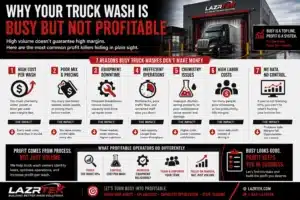
Investigate why wash volume does not always translate into profit by reviewing pricing, chemistry, labor, and operating costs together.