A lender reading your business plan is trying to answer one question: will this project make its payment in a bad month? Every section either builds that confidence or spends it. Here’s what the yes-pile plans have in common.
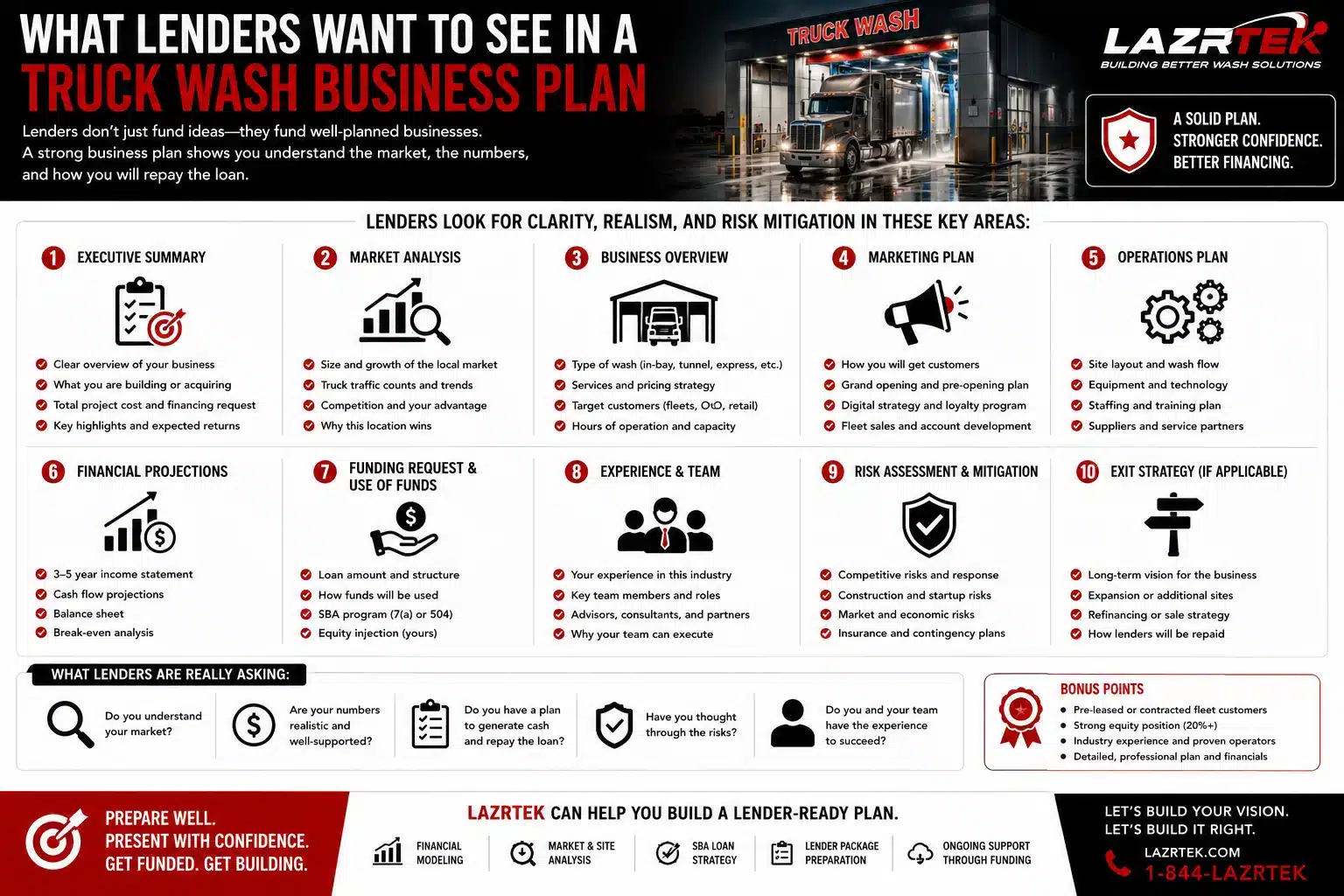
Demand evidence, not enthusiasm
Corridor truck counts, anchor fleets in the radius, competitive mapping — demand demonstrated from data, ideally from an independent feasibility study rather than the borrower’s own optimism. “The market is huge” is not evidence; a traffic count with a source is.
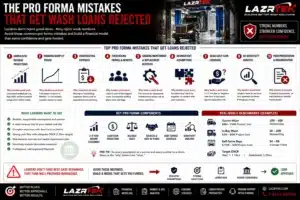
A pro forma that survives cross-examination
Revenue built up from washes × ticket with a visible ramp; operating costs with real-world ratios (chemistry per wash, one-attendant staffing); and a downside case the deal still survives. Lenders don’t expect certainty — they expect the borrower to have met the bad scenario on paper first.
Execution credibility
Who builds it, who commissions the equipment, who operates it, who fixes it at 2 a.m.? A named equipment and service partner with a track record answers the question a résumé can’t. This is where documented projects — new builds, turnarounds, district programs — do quiet work in an application.
Structure and honesty
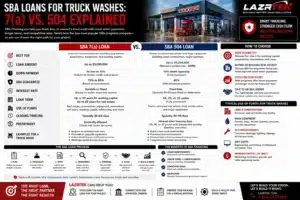
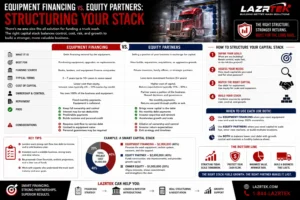
The capital stack should match the ask — SBA structures, equipment financing, equity — with covenants and coverage ratios addressed head-on. Plans that name their risks get believed on their strengths. Assembling all of it into one consistent lender-ready package is precisely what our business planning and financing service does.