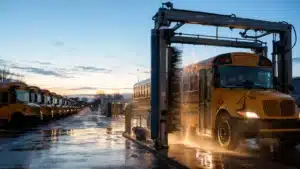
Exterior washing is a competitive market. Interior washout is a scarcity market: food and pharma carriers must wash out, few facilities can serve them properly, and the ticket prices accordingly. It’s the highest-margin service most washes never add.
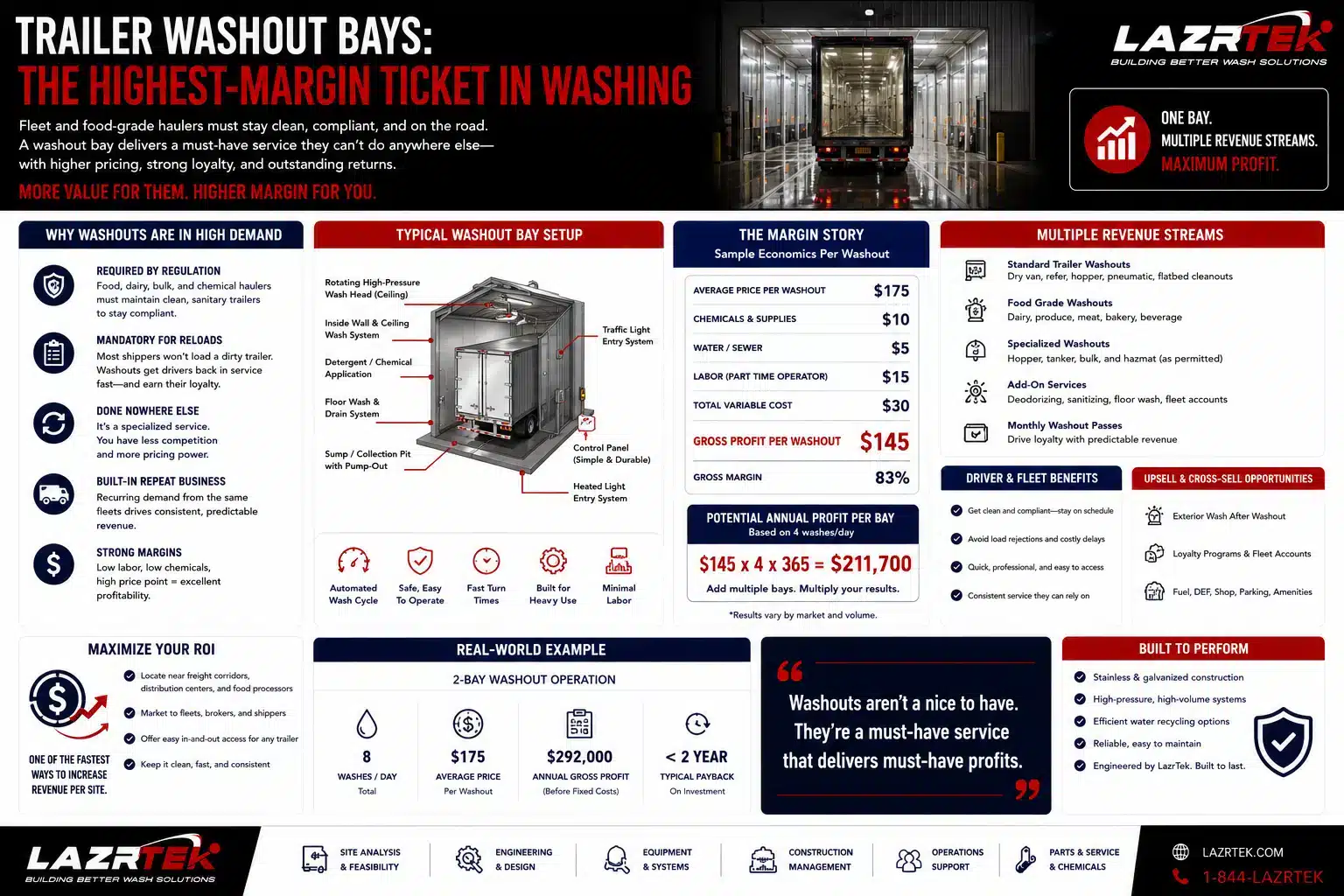
Why demand is structural
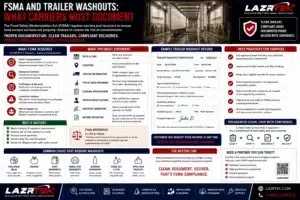
The FDA’s Sanitary Transportation rule under FSMA makes carriers responsible for sanitary transport — which in practice means documented interior cleaning between loads for reefers, dry vans hauling food, and tankers. Every food distribution corridor generates washout demand on a schedule, by regulation.
Why competition is thin
A compliant washout bay needs purpose-built equipment, food-grade sanitation chemistry like LZR-115, potable-water rinse capability, and the documentation carriers file. That barrier keeps most exterior washes out — and keeps washout pricing premium.
The business math
Washout tickets run multiples of exterior washes, the demand is contracted and recurring, and the service pairs perfectly with exterior work — the same visit, two tickets. For a wash near food processors or DCs, a washout bay is often the single highest-ROI expansion available.
Check your radius
The question is local: how many food-grade carriers operate within your draw? That’s a feasibility question with a very findable answer — and if it’s yes, the bay tends to underwrite itself.