For food-hauling carriers, a washout without documentation barely happened. Under FSMA’s Sanitary Transportation rule, the paper trail is the compliance — and the washes that understand this become vendors carriers can’t easily replace.
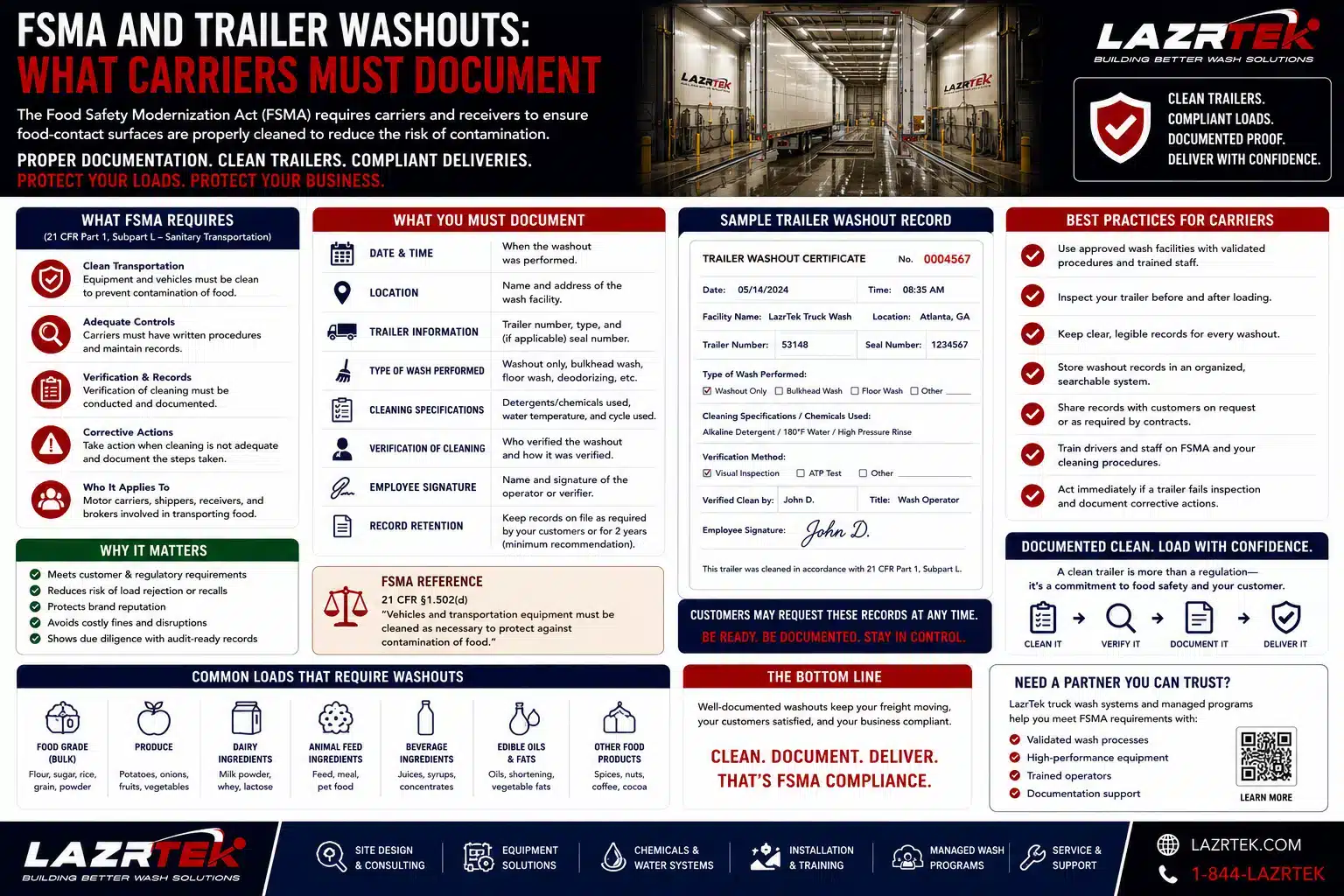
What the rule requires
The FDA’s Sanitary Transportation of Human and Animal Food rule assigns shippers, loaders, and carriers responsibility for sanitary transport conditions — vehicles and equipment suitable and adequately cleaned for the food they carry, with procedures, training, and records. Cleaning between incompatible loads, and proof of it, is where trailer washouts enter the regulation.
What carriers need from a wash
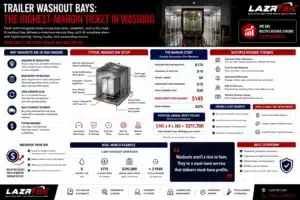
A washout ticket that stands up in an audit: date, unit number, services performed, chemistry used, and the facility’s identification — issued consistently, retrievable later. Facilities running automated washout systems with food-grade chemistry such as LZR-115 Food Grade Cleaner (used as directed, potable rinse) can make that documentation a standard output rather than a favor.
Why this is a moat
A carrier whose compliance file depends on your tickets doesn’t shop washouts on price. Documentation converts a commodity service into an embedded vendor relationship — the stickiest kind of contract revenue in washing.
Build the capability properly
Equipment, chemistry, and process have to agree. The chemical program covers the sanitation side; the washout bay itself is a scoping conversation your parcel either supports or doesn’t.