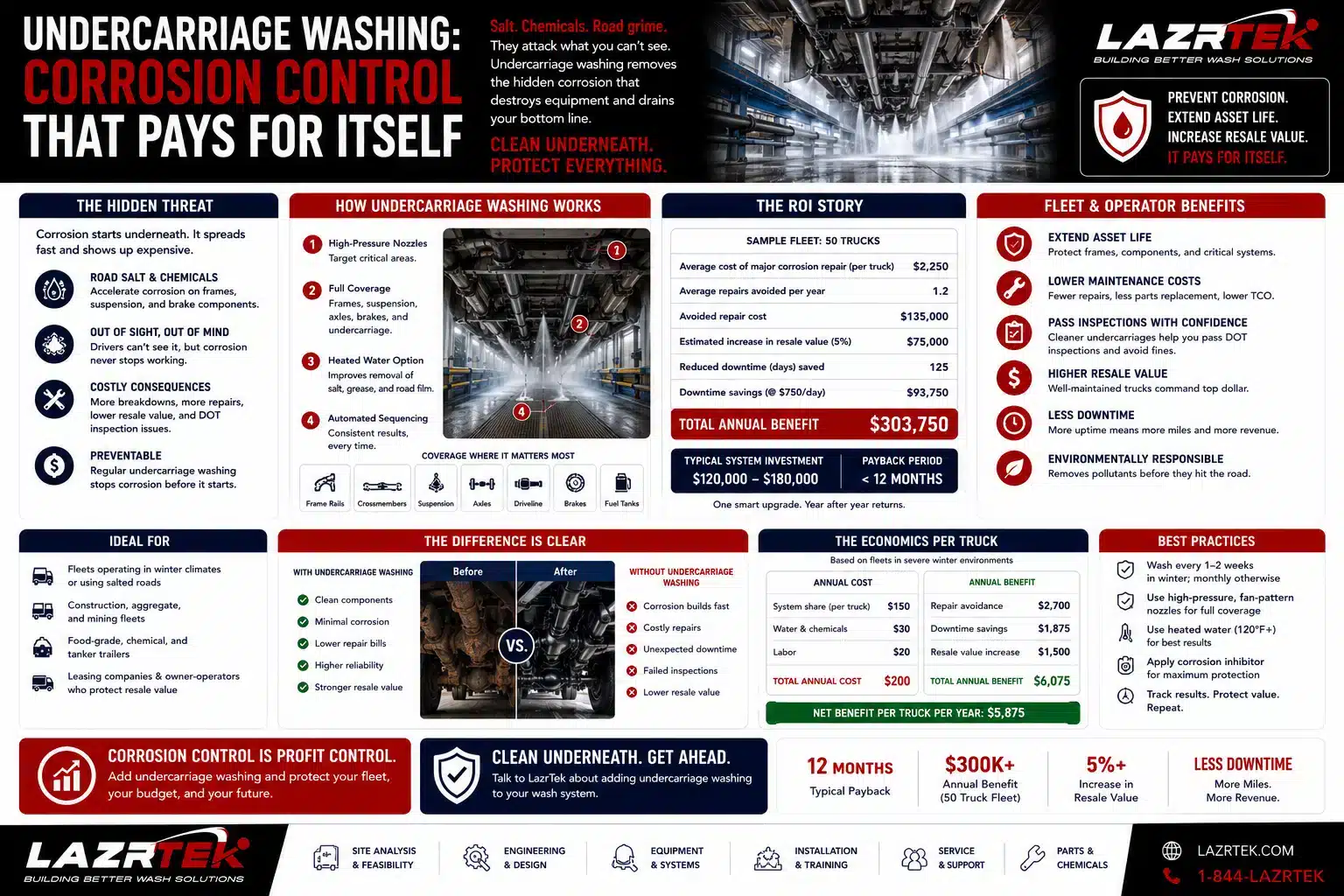
The part of the truck nobody sees is the part corrosion eats first. Frames, crossmembers, brake lines, connectors, fittings — all of it marinates in road salt, liquid de-icers, and mineral mud that a surface wash never touches. Undercarriage washing isn’t cosmetic; it’s component-life economics.
The corrosion math
Corrosion is a massive, measured cost across transportation — infrastructure agencies and studies cited by bodies like the FHWA have long documented the toll de-icing chemistry takes on vehicles and structures alike. For a fleet, it shows up as shortened component life and rising maintenance spend; regular undercarriage flushing is one of the few direct countermeasures.
What the system does
High-impact spray arrays target the frame, axles, and wheel areas from below — installable as an in-lane add-on to an existing wash or as a standalone bay. Paired with a salt-neutralizing protectant like LZR-107, it removes the residue and slows re-accumulation between washes.
Who buys it
Winter-state fleets, construction and mining operations shedding mineral-laden mud, agriculture, and municipal fleets — buyers who think in asset-life terms and sign seasonal programs. For the wash, it’s an add-on ticket with fleet-contract gravity, strongest in exactly the months exterior retail dips.
Add it deliberately
Drainage, pit design, and solids handling decide the install. A site review scopes it quickly — start that conversation before winter does.