Permitting rarely kills a good wash project — but it regularly adds six months and six figures to developers who treated it as paperwork instead of a workstream. The path is predictable if you walk it in order.
Zoning first, always
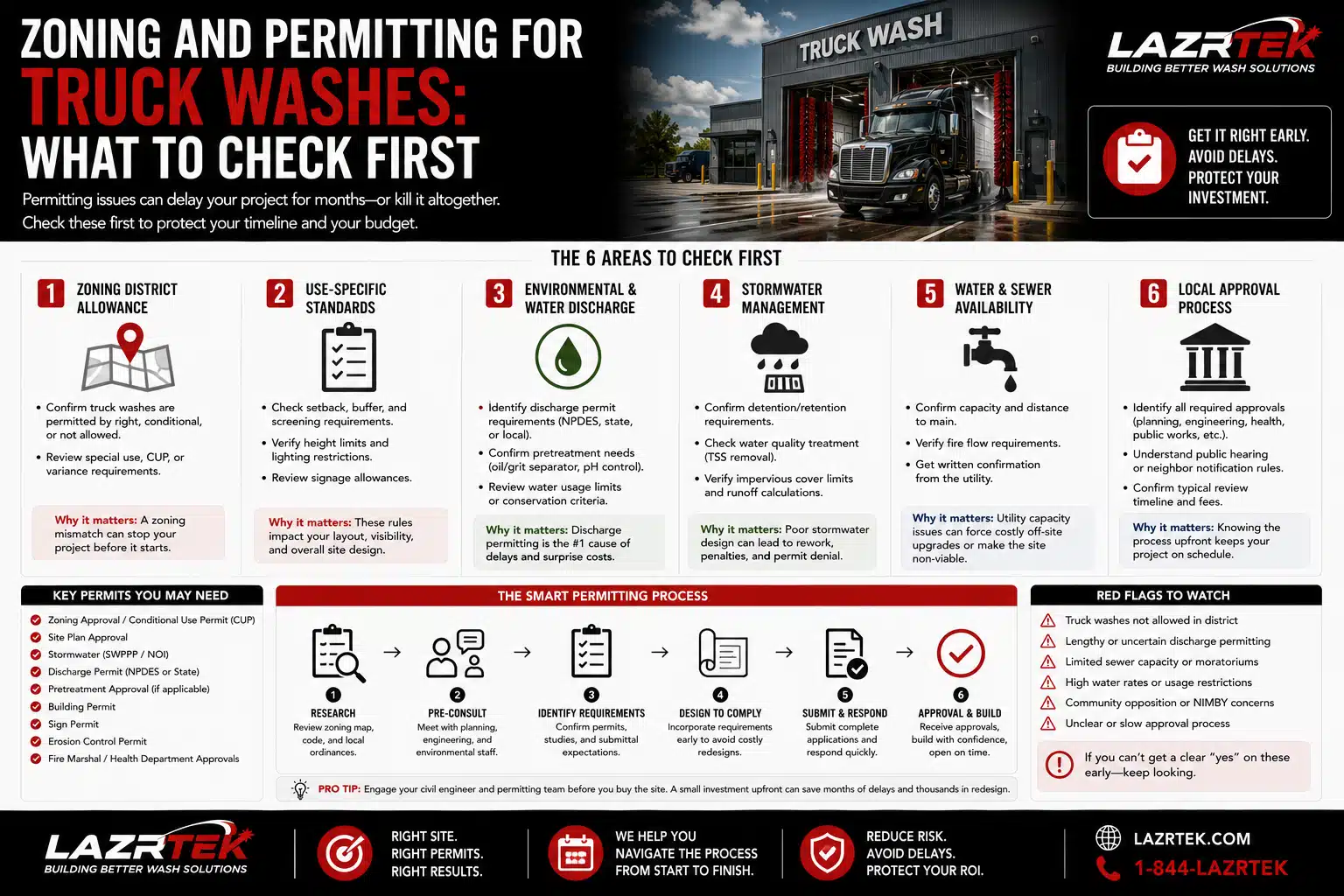
Before falling in love with a parcel, confirm its zoning classification allows vehicle washing — outright, or via conditional/special use permit. A CUP is not a rejection; it’s a public process with hearings and conditions, and its timeline belongs in your project schedule from day one.
The water permits
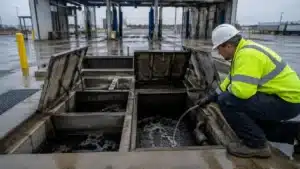
Two separate conversations: stormwater (how rain leaves your paved site during and after construction) and process discharge (how wash water reaches the sanitary sewer, usually with pretreatment conditions). Federal frameworks under the EPA\u2019s NPDES program flow down through state and local authorities, so the specifics are local even when the principles are national.
Site plan approval and the details
Access curb cuts (often a DOT conversation on state highways), turning-path exhibits, landscaping buffers, signage rights, lighting, and noise — each is a line item in site plan review. None is hard; all take calendar time, and calendar time is interest expense.
Sequence it like a pro
Experienced developers run zoning verification during site selection, fold permit timelines into the feasibility study schedule, and submit applications in parallel wherever authorities allow. The approvals then arrive alongside financing instead of after it — which is the whole trick.