Loan officers develop pattern recognition, and wash pro formas trigger it fast. The same handful of mistakes appear so often that any one of them can move an application to the slow pile. All are avoidable.
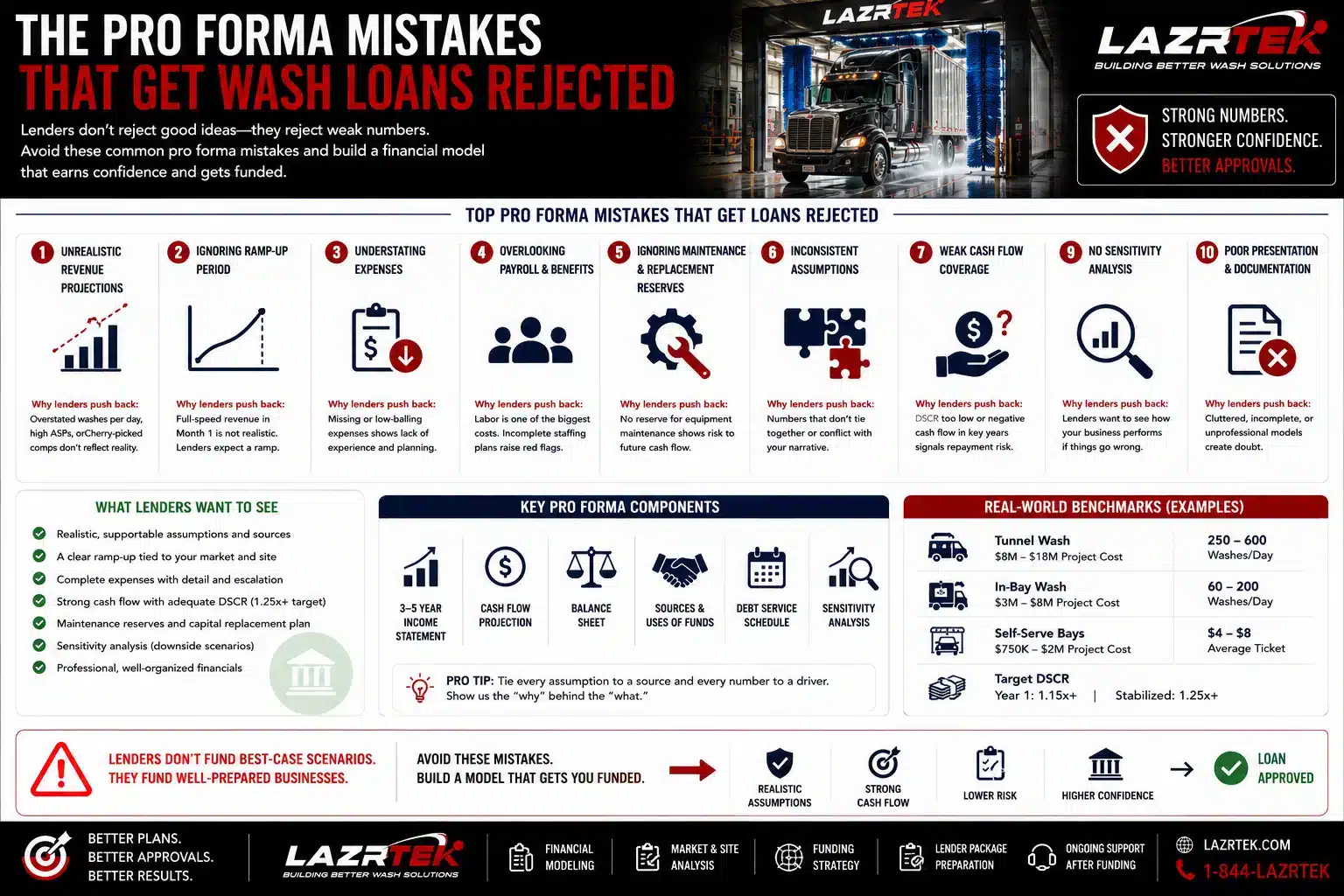
Mistake one: the instant-maturity ramp
Month one revenue at year-three volume. Every lender knows washes ramp — contracts take quarters to build, and retail habit takes months. A pro forma without a visible, funded ramp reads as either naivety or salesmanship, and neither gets funded.
Mistake two: working capital amnesia
The budget builds the wash but nothing operates it — no chemistry inventory, no launch marketing, no payroll cushion through the ramp. This is the omission that turns fundable projects into distressed ones eighteen months later, and underwriters hunt for it specifically.
Mistake three: fantasy ratios
Chemical cost per wash from a brochure, staffing from wishful thinking, maintenance at zero because the equipment is new. Lenders benchmark against operating reality; ratios without operational grounding — the kind a feasibility study or an operating partner provides — flag the whole model.
Mistake four: no downside case
One scenario, no sensitivity. The application that survives shows the payment covered at meaningfully reduced volume — because that’s the exact question the credit committee will ask aloud.
Build it lender-first
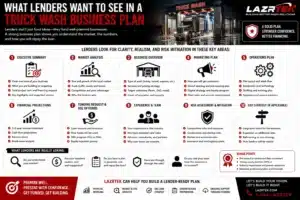
LazrTek business planning constructs the pro forma the way SBA lenders read it — ramped, provisioned, benchmarked, stress-tested — so the model answers objections before they’re raised.