Selling a wash system to a school district the way you’d sell to a private operator fails every time — not because districts don’t need washing, but because they’re structurally unable to buy that way. Understanding municipal purchasing is the whole game.
The budget cycle is the calendar
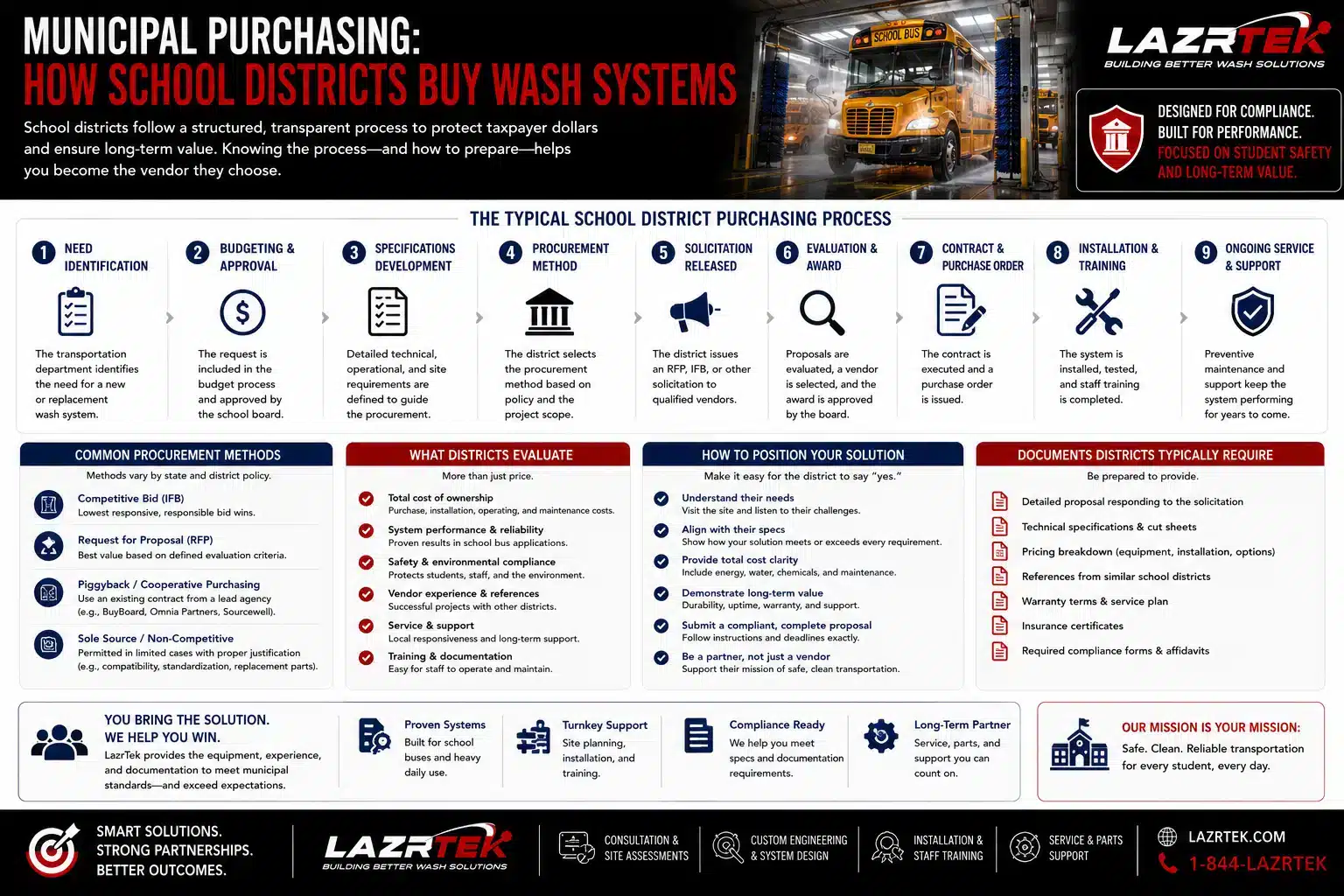
District capital spending lives in annual budget cycles with proposal windows months before approval. A bus wash enters as a capital request — often framed around safety (clean lights, mirrors, and reflectors are a visibility issue), asset preservation for a fleet worth millions, and labor savings versus hand-washing. Miss the cycle and the project waits a year, no matter how good it is.
Bids, RFPs, and co-ops
Above threshold amounts, districts must procure competitively — formal bids or RFPs with published specs. The efficient alternative many districts use is cooperative purchasing: contracts pre-competed through purchasing co-ops that member districts can buy against directly, compressing months of process. Vendors who understand both paths can meet a district wherever its procurement office is comfortable.
The program, not the machine
Transportation directors don’t want equipment; they want a defensible program — systems sized for buses, operator training, district-safe chemistry, service coverage, and documentation the board can approve. That’s the package behind facilities like the ones in our school district case study, including the largest school-bus washer in Tennessee.
Start the conversation right
LazrTek\u2019s business planning service builds municipal-ready proposals — budget-cycle timing, spec language, co-op options — so the project your district needs is one the process can actually approve.