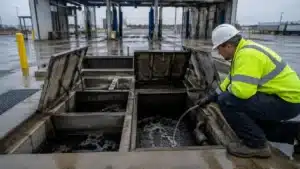
A truck wash is a water business wearing a building. The costliest development mistakes aren’t design errors — they’re utility assumptions that the parcel refused to honor.
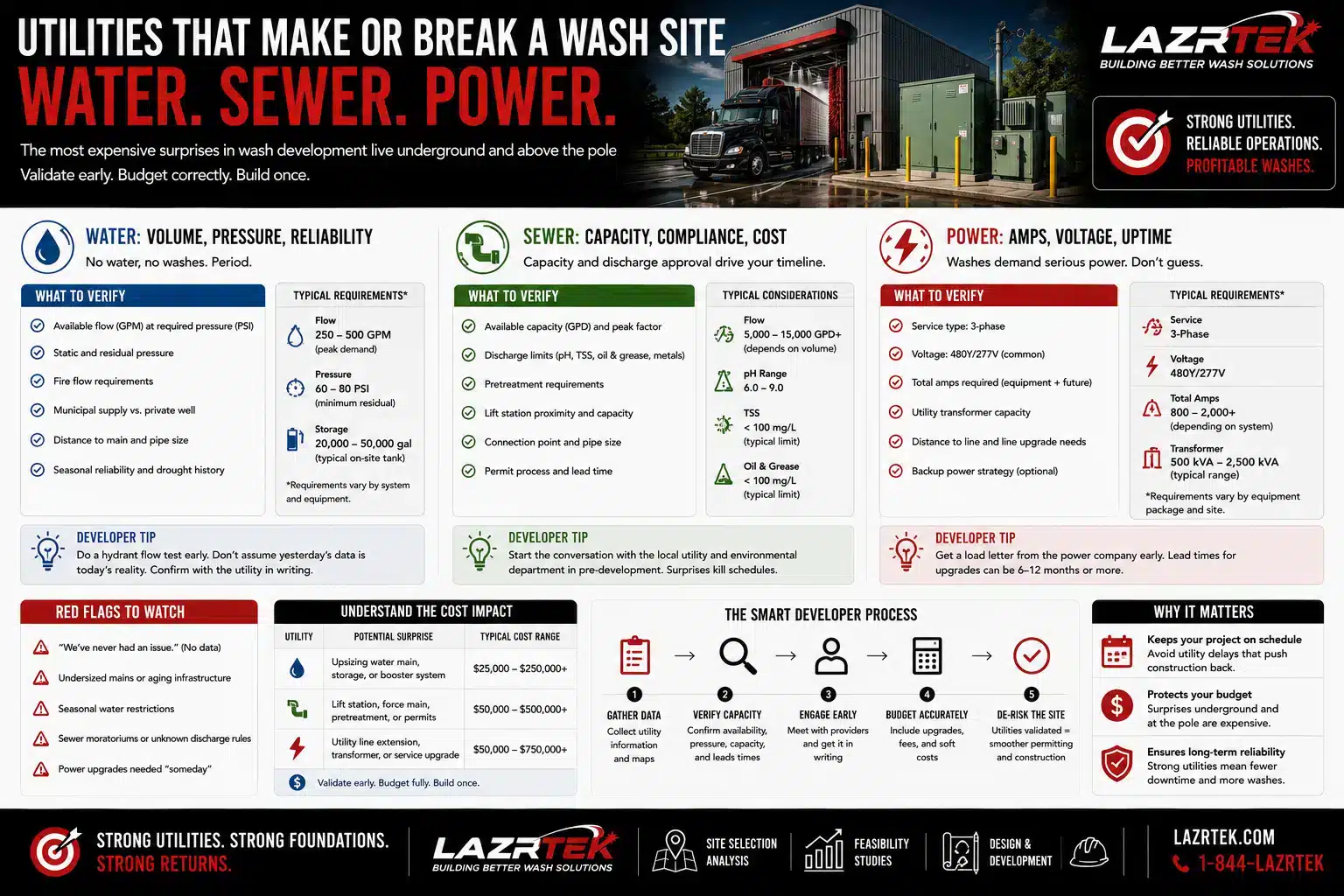
Water: supply and pressure
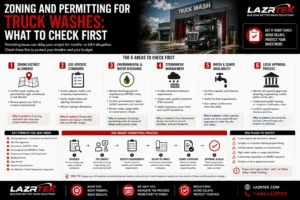
The wash needs sustained flow at working pressure, and the municipal line serving your parcel may or may not deliver it. Tap fees, meter sizing, and line-extension costs vary wildly by jurisdiction. Reclaim systems — which modern washes should run both for economics and for the water stewardship the EPA encourages — reduce draw but don’t eliminate it.
Sewer: the quieter constraint
What goes down the drain is regulated. Sanitary sewer capacity, pretreatment requirements (oil/water separation, solids interceptors), and discharge permitting differ by municipality — and a parcel on septic is usually a non-starter. Sewer questions answered late are the classic six-figure surprise.
Power: three-phase or bust
Pumps, dryers, and heaters want three-phase power. If the nearest three-phase service is far from your parcel, the utility’s line-extension quote joins your budget. Confirm service availability in writing, not from a glance at the poles.
Diligence before dirt
Utility verification is a standard module of site selection analysis — will-serve letters, capacity confirmations, tap fee schedules — so the feasibility study budgets reality instead of hope. It’s the least glamorous work in development and the highest-yield insurance you can buy.
Go Deeper