A school bus carries more than students—it carries your district’s reputation. A clean, well-maintained fleet signals professionalism, communicates safety, and extends the operational life of vehicles that represent significant capital investment. Yet for many fleet managers and transportation directors, the question of how to wash those buses efficiently, cost-effectively, and responsibly remains surprisingly complex.
Manual scrubbing with a hose and bucket is not a viable strategy for a fleet of 20, 50, or 200 vehicles. Neither is a poorly configured automated system that leaves road film, salt deposits, and grime baked into paintwork and undercarriage components. Selecting the right bus wash system requires a clear understanding of the available technologies, their trade-offs, regulatory obligations, and long-term costs.
This guide breaks down every major consideration—from friction versus touchless systems to water reclamation, cost analysis, and year-round maintenance best practices—so your fleet operates cleaner, smarter, and more sustainably.
Manual vs. Automated Bus Wash Systems
The starting point for any fleet washing decision is understanding the fundamental difference between manual and automated approaches—and recognizing why the latter almost always wins at scale.
Manual washing relies on staff using pressure wands, brushes, and chemical applicators to clean each vehicle by hand. The advantages are low upfront cost and flexibility. The disadvantages are considerable: labor intensity, inconsistent results, high water waste, and compliance risk when wash water runs off into storm drains untreated. According to the EPA’s Stormwater Best Management Practice guidelines, vehicle wash water can contain oils, grease, heavy metals, phosphorus, nitrogen, and surfactants—all of which pose serious environmental hazards if improperly discharged.
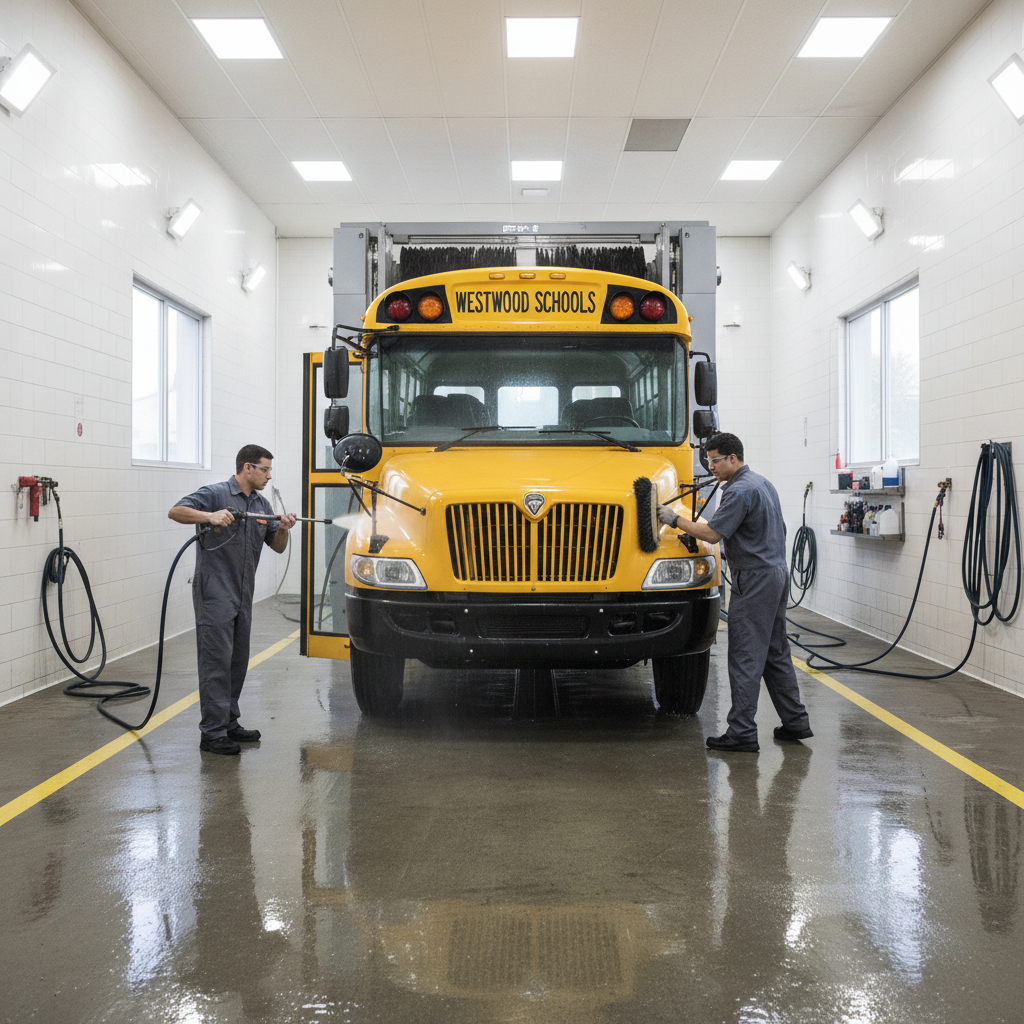
Automated bus wash systems eliminate most of these pain points. Drive-through configurations wash a full-sized school bus in minutes with minimal operator involvement, delivering consistent, repeatable results across every vehicle in the fleet. Properly engineered systems also incorporate water containment, treatment, and reclamation infrastructure—keeping your operation compliant and your utility bills under control.
For school districts and contractors operating medium to large fleets, the case for automation is straightforward. The real decision comes down to which type of automated system best fits your operational profile.
Benefits of Drive-Through Friction Bus Wash Systems
Friction wash systems—also called soft-touch systems—use rotating brushes or cloth applicators saturated with soap and water to physically scrub vehicle surfaces. Modern friction systems have come a long way from the stiff-bristle machines of earlier decades.
Today’s friction equipment uses materials including lamb skin, closed-cell foam, and cruciform polyethylene that are engineered to clean effectively without damaging paint or graphics. According to industry sources, high-quality foam brushes can last up to 40,000 wash cycles; polyethylene brushes, approximately 20,000. At those service intervals, brush replacement becomes a predictable, manageable line item rather than an ongoing emergency expense.
The core advantages of friction systems for school bus fleets include:
- Superior cleaning performance: Physical contact between brush media and vehicle surface dislodges caked-on road film, bug splatter, and exhaust residue more thoroughly than water pressure alone
- Reduced chemical consumption: The mechanical action of brushes reduces reliance on high-concentration chemical formulas, lowering both cost and environmental impact
- Reliable results on contoured surfaces: School buses feature complex exterior geometries—wheel wells, window frames, emergency exits, lighting clusters—that friction brushes navigate more effectively than stationary nozzles
- Higher throughput: Friction systems move vehicles through wash cycles quickly, a significant operational advantage for large fleets with narrow morning maintenance windows
The most common complaints about friction systems—scratching and streaking—almost always trace back to neglected equipment. Worn brushes that have lost structural integrity and proper length leave lines and residue on vehicle surfaces, much like a broom with flattened bristles. Pairing fresh brush media with appropriate, lubricating soap chemistry eliminates both issues. Diligent maintenance is the non-negotiable operating condition for any friction wash system.
Advantages of Touchless Wash Systems for Fleet Longevity
Touchless wash systems substitute physical contact with high-pressure water jets and stronger chemical formulas. Sensors map vehicle contours in real time, directing spray arcs to follow the shape of each bus and ensuring even coverage across the entire surface.
For fleet managers with concerns about vehicle graphics, special decals, or delicate exterior components, touchless systems offer a compelling argument: nothing touches the bus except water and cleaning agents. That zero-contact approach eliminates any mechanical risk to paint, wrap films, or trim pieces.
Key advantages of touchless systems include:
- No mechanical contact: Removes the risk of brush-related abrasion or damage to antennas, mirrors, and body moldings
- Lower mechanical maintenance: Fewer moving parts means fewer wear components requiring replacement
- Precision water delivery: Sensor-guided nozzles minimize overspray and reduce water consumption compared to wide-area manual washing
However, touchless systems carry their own operational constraints. High-pressure water alone cannot always penetrate caked grime, heavy road salt deposits, or thick film contamination—particularly on wheel wells and undercarriage surfaces that accumulate the most debris in winter conditions. Achieving touchless results equivalent to friction washing typically requires higher-concentration chemical applications, which increases chemical costs and may pose surface finish risks over time. Touchless systems also demand rigorous maintenance of their sensor arrays, nozzle assemblies, and pump systems; any degradation in component performance directly degrades wash quality.
The decision between friction and touchless is not simply about preference. It depends on your fleet’s specific exposure—geographic climate, road conditions, vehicle age and finish condition, and acceptable risk tolerance for mechanical contact.
Water Reclamation and Eco-Friendly Washing Solutions
Environmental compliance is no longer optional for school district fleet operations. The EPA’s municipal vehicle washing guidelines make clear that wash water containing sediment, oils, grease, heavy metals, and surfactants cannot be discharged to storm drain systems. Failure to contain, treat, or properly dispose of wash water exposes municipalities to regulatory liability and downstream environmental harm.
A well-designed wash facility incorporates several layers of environmental management:
Wash rack construction: The EPA recommends paved wash surfaces with berms or sloped drainage to direct all runoff to a central sump. The sump connects either to the sanitary sewer (subject to pretreatment requirements from the local authority) or to an on-site recycling system.
Oil/water separators: Required in most jurisdictions before wash water can be discharged to a sanitary sewer, these systems remove hydrocarbon contamination from the wash stream.
Water reclamation systems: Advanced reclaim systems filter, treat, and recirculate wash water back into the wash cycle. Commercial car washes and fleet facilities using designated wash bays consume significantly less water per wash than equivalent hand-washing operations, according to EPA data. Incorporating reclamation infrastructure reduces water utility costs while also reducing the volume of contaminated effluent requiring treatment or disposal.
Biodegradable chemical selection: The EPA specifically recommends phosphate-free, non-toxic, biodegradable cleaning agents for municipal vehicle washing. These reduce discharge toxicity and are generally less corrosive to both vehicle surfaces and wash equipment, extending the service life of both.
For school districts operating in water-stressed regions or facing tightening stormwater regulations, investing in reclamation infrastructure is not just a compliance decision—it is a cost management strategy. Reduced water consumption translates directly to lower utility bills, and the operational savings compound over years of fleet washing activity.
Cost-Benefit Analysis for School Districts and Contractors
Capital expenditure sensitivity is a real constraint in public-sector procurement. School districts and transportation contractors evaluating bus wash systems must weigh upfront infrastructure costs against the long-term operational and compliance savings automated systems deliver.
The EPA’s cost ranges for fleet washing infrastructure (reported in 2020 dollars) provide useful benchmarks:
| Infrastructure Component | Cost Range |
|---|---|
| Berm construction | $700 – $6,000 |
| Drainage retrofits | $7,000 – $35,000 |
| New fleet washing facility (installation) | $25,000 – $2,500,000 |
| Treatment or recycling system (installation) | $40,000 – $250,000 |
| Wash bay (annual operating costs) | $3,000 – $5,500 |
| Commercial car wash contract rate | $13 – $55 per truck |
These ranges reflect the wide variation in fleet size, vehicle type, site constraints, and targeted pollutant levels. Smaller districts with limited budgets may find contracted commercial washing more cost-effective for smaller vehicles, while larger fleets typically achieve better per-unit economics by investing in on-site automated systems.
When building the business case for automated bus wash investment, the key variables to quantify are:
- Labor savings: Drive-through automation eliminates the man-hours consumed by manual washing across an entire fleet
- Water savings: Reclaim systems reduce municipal water consumption per wash cycle substantially
- Chemical efficiency: Precision dosing systems in automated equipment reduce chemical waste compared to manual application
- Compliance cost avoidance: Proper wash facilities eliminate the regulatory risk of untreated wash water discharge
- Vehicle longevity: Consistent, thorough washing—particularly undercarriage cleaning that removes road salt—reduces corrosion-related maintenance and extends vehicle service life
Key Features to Look for in a Commercial Bus Wash
Not all commercial wash systems are engineered to handle the specific demands of school bus fleets. When evaluating systems, prioritize the following capabilities:
- Bus-scale bay dimensions: School buses are tall, wide, and long. Verify that wash bay clearances accommodate your largest fleet vehicles without modification
- Undercarriage wash capability: Road salt accumulation in undercarriage components is a primary driver of structural corrosion. Systems with dedicated undercarriage spray bars address this directly
- Adjustable brush or nozzle positioning: Fleet vehicles vary in profile. Automated height and width adjustment ensures full coverage regardless of vehicle type
- Integrated water reclamation: Built-in reclaim infrastructure reduces water consumption and simplifies environmental compliance
- Stainless steel construction: Wash bay equipment operates in a permanently wet, chemically active environment. Stainless steel resists corrosion and maintains structural integrity over years of heavy use
- Chemical dosing controls: Precision metering systems reduce product waste and ensure consistent cleaning results across every wash cycle
- Throughput capacity: Calculate peak demand—how many buses must be washed within what time window—and verify that the system’s cycle time supports that requirement
Maintenance Tips for Keeping School Buses Pristine Year-Round
A wash system investment only delivers value when maintained properly and used consistently. These operational practices maximize both equipment performance and fleet cleanliness:
Establish a regular wash schedule: Buses exposed to road salt, dust, exhaust, and weather require consistent washing—not occasional cleaning when visible dirt accumulates. Frequency should increase during winter months when salt and chemical de-icers accelerate corrosion.
Prioritize undercarriage washing after winter routes: Salt intrusion into frame members, brake components, and fuel lines is a leading driver of premature vehicle retirement. Undercarriage wash cycles should be standard protocol following any route in salted road conditions.
Inspect and replace brush media on schedule: Worn brushes clean poorly and can cause surface damage. Build brush inspection into regular preventive maintenance cycles and replace media before it reaches the end of serviceable life.
Maintain nozzle assemblies in touchless systems: Clogged or misaligned nozzles compromise wash coverage. Periodic inspection of nozzle condition and spray pattern ensures the system performs as designed.
Train all wash bay operators: The EPA explicitly recommends regular employee training in vehicle washing and water management procedures, including refresher training. Proper technique, chemical handling, and containment practices protect both equipment and the environment.
Inspect wash rack infrastructure: Periodically check paved surfaces, berms, sump connections, and treatment systems for cracks, leaks, or contamination buildup. Address defects promptly to maintain containment integrity.
Use phosphate-free, biodegradable cleaning agents: Eco-conscious chemical selection reduces discharge toxicity, protects aquatic environments, and is less corrosive to equipment—extending service life across the entire wash system.
Selecting the Best Wash System for Your Fleet
The optimal school bus wash system is not a universal answer—it is a function of your fleet size, operating environment, budget structure, and regulatory obligations. Friction systems deliver the most thorough mechanical cleaning and highest throughput, making them the preferred choice for large fleets operating in challenging seasonal conditions. Touchless systems offer a lower-contact option suited to fleets prioritizing vehicle finish protection or operating in milder climates with lighter contamination loads. Water reclamation and proper wash rack infrastructure are non-negotiable components of any compliant, cost-efficient fleet washing operation.
What every fleet ultimately requires is a system engineered for the job—sized appropriately, built durably, and supported by a maintenance discipline that keeps it performing at peak capacity. The buses rolling off your routes each afternoon represent a substantial investment in student safety and community trust. A professional wash program protects that investment, extends vehicle service life, and keeps your fleet looking as reliable as it actually is.
Ready to evaluate the right automated wash solution for your school bus fleet? Contact our team to discuss a system configuration matched to your fleet size, facility constraints, and operational requirements.