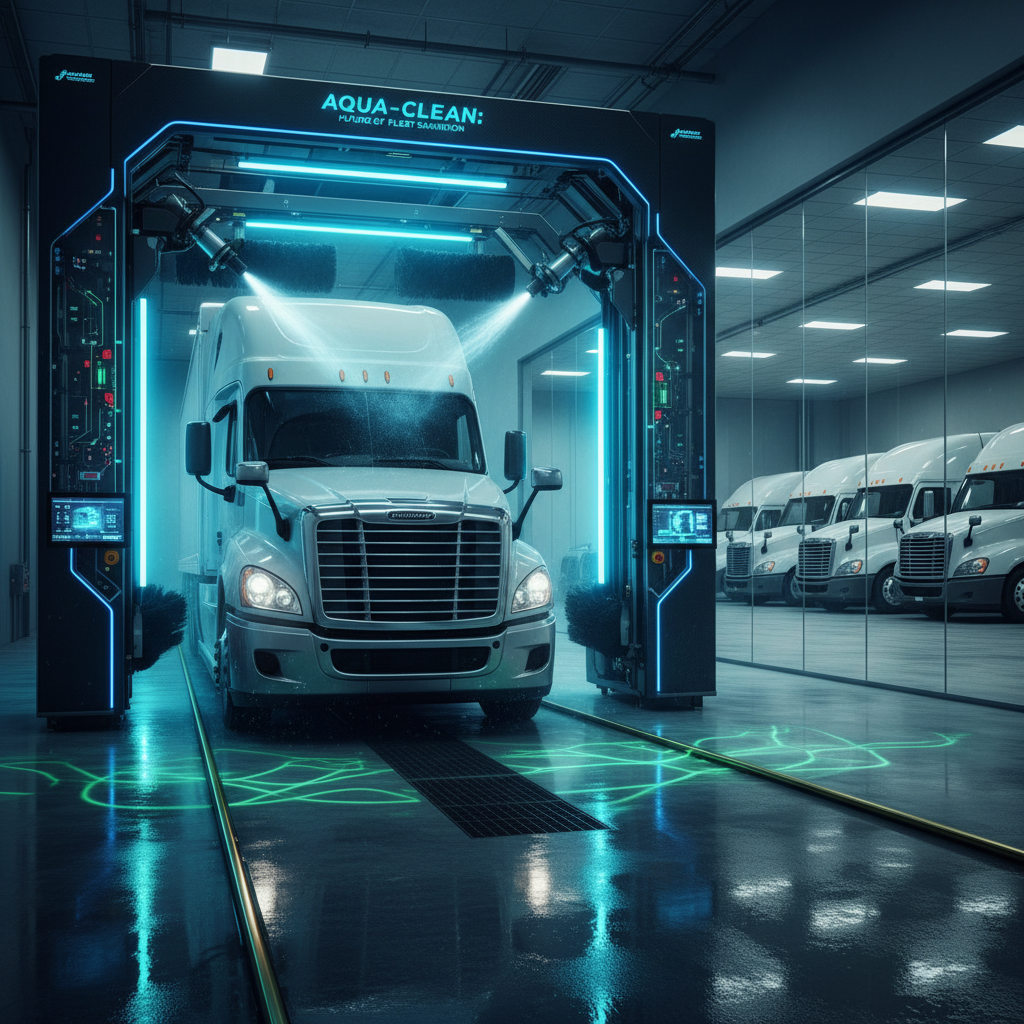
Fleet appearance is more than aesthetics—it’s your brand, policies, and asset protection. Yet many operators treat washing as a chore rather than a strategic investment. The right truck wash manufacturer changes that.
Choosing automated truck wash equipment is a major financial decision. Done right, you cut labor and water use, speed up wash cycles, and protect vehicles. Done wrong, you face underperformance, high maintenance, and compliance issues. This guide helps you evaluate everything from system types and ROI to regulations and trustworthy manufacturers.
From Manual Labor to Automated Systems: A Brief History
Heavy-duty vehicle washing began as pure manual labor: pressure wands, long shifts, inconsistent results. The limitations were obvious. Manual washing is slow, expensive, and subject to human error. A large fleet operating with manual wash bays faces real constraints on throughput, chemical consistency, and water management.
The shift toward automated systems accelerated in the late 20th century as Class 8 trucking expanded and fleet operators began quantifying the true cost of vehicle cleanliness—not just appearance, but also compliance, maintenance, and operational functionality. Modern automated truck wash systems now incorporate vehicle-scanning technology, precision chemical dosing, closed-loop water reclamation, and programmable wash cycles customized to vehicle type.
The result: faster cycles, lower operating costs, and a level of consistency no manual wash program can match.
Key Factors to Consider When Choosing a Truck Wash Manufacturer
Not all manufacturers deliver equal value. Before committing to a system, evaluate suppliers against these core criteria:
System Compatibility and Expandability
Can the system accommodate your current fleet composition—and your fleet five years from now? Look for modular designs that scale with operational growth and support a mix of vehicle types, from standard tractors to tankers and specialty equipment.
Water Reclamation Capability
Water reclamation is no longer optional for serious fleet operations. Prioritize manufacturers whose systems have been engineered with integrated reclaim as standard, not an expensive add-on.
Chemical Dosing Precision
Inconsistent detergent application wastes product, risks surface damage, and increases operating costs. Precision dosing systems maintain calibrated chemical concentration across every wash cycle.
Construction Quality and Uptime
Wash systems operate amid demanding circumstances. Corrosion-resistant stainless steel construction, sealed components, and accessible service points directly affect long-term uptime. Ask manufacturers for documented mean time between failures and maintenance schedules.
Regulatory Compliance Support
Your manufacturer should be knowledgeable about federal, state, and local discharge regulations—and their equipment should make compliance straightforward, not burdensome.
After-Sales Support
A wash system is a long-term relationship. Evaluate manufacturers on parts availability, response times, remote diagnostics, and the depth of their technical support network.
A Deep Explore Wash System Types
Comprehending the mechanics of each system type is essential for matching equipment to operational requirements. Three primary configurations dominate the commercial truck wash market.
Drive-Through Systems
The AA drive-through truck wash has fixed arches or brushes. The driver moves the vehicle through the wash bay at a steady speed, passing under spray nozzles and cleaning parts. Best suited for: High-volume operations where throughput speed is the priority. Drive-through systems are common at truck stops and commercial wash facilities that process large numbers of vehicles daily.
Main advantages:
- Very fast wash cycles
- High vehicle throughput capacity
- Low per-wash labor requirement
Limitations to consider:
- Wash consistency depends partially on driver speed control.
- Less precise coverage on vehicles with complex geometry
- Higher water and chemical consumption per cycle compared to gantry systems
Gantry Systems
A gantry truck washes the vehicle while the wash machine moves around it. Modern gantry systems use vehicle-scanning technology to measure height, length, and surface contours before the cycle begins, assuring consistent spray angles and coverage patterns regardless of vehicle size.
Best suited for: Private fleet operations, dealerships, and facilities that focus on wash quality and asset protection over raw throughput speed. Gantry systems are the favored option for fleets with mixed or irregular vehicle types.
Main advantages:
- Highly consistent wash results independent of driver behavior
- Adapts to vehicle height, length, and shape
- Reduced risk of damage to mirrors, sensors, and antennas
- Predictable wash cycles simplify labor scheduling.
Limitations to consider:
- Longer cycle times than drive-through systems
- Lower hourly throughput capacity
Touchless vs. Friction Systems
Both drive-through and gantry configurations are available in touchless or friction (brush) variants. This distinction is important for protecting fleet assets.
Friction (brush) systems use rotating brushes or cloth materials that make physical contact with the vehicle surface. Mechanical scrubbing effectively removes heavy mud and road film, and chemical usage per cycle is typically lower. The tradeoff is an elevated risk of surface damage—particularly to antennas, lights, sensors, and specialized coatings—and higher long-term maintenance costs due to brush wear.
Touchless systems count on a two-step chemical process: a low-pH detergent breaks the static bond between contaminants and the vehicle surface, followed by a high-pH detergent that neutralizes residue, degreases, and lifts remaining contamination. A final high-pressure rinse clears the surface without any physical contact.
For fleets with sensitive equipment or premium graphics, touchless systems offer reduced damage risk and consistent results. Touchless gantry configurations are most recommended for private fleet operations.
| Asset protection | Touchless truck wash |
| Consistent cleaning | Gantry truck wash |
| Fast throughput | Drive-through truck wash |
| Irregular vehicle shapes | Touchless gantry |
| Lower damage risk | Touchless automatic truck wash |
The ROI of Professional Truck Washing
Capital expenditure objections are the most common barrier to investing in quality truck wash equipment. The ROI case is stronger than most fleet operators initially realize.
Labor Savings
Manual wash programs require significant staffing, notably for large fleets. Automated systems substantially reduce labor requirements—many operations report cutting wash-related labor by 40% or more after transitioning to automated equipment. That reduction compounds across every operating day.
Automobile Durability
Road grime, salt, and chemical deposits accelerate corrosion on undercarriage components, brake assemblies, and frame structures. Regular automated washing removes these contaminants before they cause structural damage, extending vehicle service life and reducing repair frequency.
Aerodynamics and Fuel Efficiency
Heavy-duty trucks are aerodynamically inefficient by design—their large frontal areas and bluff-body shapes create substantial drag. Research published in Transportation Research Part D (Mohamed-Kassim & Filippone, 2010) found that aerodynamic drag accounts for a significant portion of fuel consumption on long-haul routes, with a 40-tonne articulated truck traveling at 60 mph consuming approximately 34 liters of fuel to overcome drag over a 100-mile stretch of highway. Accumulated road film adds surface roughness, further increasing this drag. Consistent exterior cleaning supports maintaining the vehicle’s aerodynamic performance.
Brand and Customer Perception
Your trucks operate as mobile billboards. A dirty, road-grime-covered fleet signals neglect to every driver, shipper, and potential client on the road. Professional cleaning retains the visual standard your brand depends on.
Wash Cycle Speed
High-speed automated cycles return vehicles to service faster. Fewer vehicles sitting in a wash bay means more vehicle hours generating revenue.
Environmental Impact and the Shift Toward Water Recycling
Regulatory pressure on wastewater discharge is intensifying. According to the EPA’s WaterSense at Work guidance (November 2023), improper vehicle washing can release hydrocarbons, heavy metals, and detergent-rich water into storm drain systems—a direct pathway to local waterways. Commercial facilities are increasingly required to treat or reclaim wash water before discharge.
The environmental and financial case for water reclamation systems is a perfect fit. EPA research found that vehicle wash facilities can reduce fresh water consumption by 50% to 83% by installing a recovery system. The ICA studies referenced by the EPA documented that conveyor wash systems using reclaimed water used twice as many gallons of reclaimed water as fresh water, with some facilities achieving reclaimed water ratios of 1.9 to 4.9 gallons of reclaimed water per gallon of fresh water consumed.
The mechanics of reclamation vary depending on the required water quality. At a minimum, reclaim systems must separate grit, oil, and grease from wash water, which is sufficient for undercarriage reuse. More advanced treatment through oxidation, membrane filtration, and deionization enables reclaimed water use during pre-soak, wash, and final rinse stages. The EPA recommends limiting fresh water consumption to 35 gallons per vehicle for conveyor systems and 40 gallons per vehicle for in-bay automatic systems.
Beyond the environmental benefit, water reclamation directly reduces:
- Municipal water consumption ordinances
When evaluating manufacturers, ask specifically about reclamation system integration, filter maintenance requirements, and chemical compatibility with their reclaim units.
Fleet Maintenance Programs: What Success Looks Like
The most effective fleet wash programs share common characteristics:
Standardized Wash Schedules
Consistent washing intervals prevent contaminant buildup that accelerates corrosion and makes cleaning more difficult. High-mileage highway fleets typically require washing every 1 to 2 weeks, depending on route conditions; operations in high-salt or high-dust environments may require more frequent cycles.
Documented Performance Measures
Successful programs track water consumption per vehicle, chemical costs, wash cycle times, and labor hours. These metrics create the baseline for ongoing optimization and support ROI documentation for capital justification.
Integrated and dosed correctly, it’s just as important as the wash system itself. Precision dosing equipment, along with biodegradable and equipment-safe chemicals, helps lower costs areduce nd environmental risk.
Preventive System Maintenance
Scheduled maintenance of nozzles, pumps, filtration components, and sensor systems prevents unplanned downtime. Leading manufacturers offer remote diagnostic tools that identify performance degradation before it becomes a failure.
Operations that have integrated these items report consistent reductions in vehicle maintenance costs, improved fleet appearance scores, and measurable water and labor savings that compound over the equipment lifecycle.
The Road Ahead: Future Trends in Heavy-Duty Vehicle Cleaning
The truck wash industry is moving in a clear direction. Several developments are altering what fleet operators should expect from next-generation systems:
Advanced Vehicle Scanning
LiDAR and optical scanning technology allow wash systems to map vehicle geometry in real time, adjusting spray angles and coverage patterns to match each vehicle’s unique contours. This improves cleaning uniformity throughout mixed fleets while reducing water and chemical waste.
Autonomous and Remote Monitoring
Cloud-connected wash systems offer real-time operational data, remote diagnostics, and predictive maintenance alerts. Operators can monitor water consumption, chemical usage, cycle counts, and equipment health from any location.
Closed-Loop Water Systems
The next step for water reclamation is almost zero-discharge systems, where almost all wastewater is treated and used. As rules get stricter and water costs rise, closed-loop systems will become standard rather than a premium option.
Electrification of Wash Equipment
As fleets electrify their vehicles, wash equipment manufacturers are responding with electric-powered pump-and-drive systems that reduce energy consumption and are consistent with fleet sustainability commitments.
Selecting the Right Partner for Long-Term Results
Selecting a truck wash manufacturer is a decision that will affect your operating expenses, environmental compliance, and fleet appearance for a decade or more. The right manufacturer offers more than equipment—they provide expertise in system design, installation, ongoing support, and technical knowledge to help you improve performance throughout the full equipment lifecycle.
Prioritize manufacturers who can demonstrate water reclamation performance, provide documented ROI data, support compliance with applicable discharge regulations, and back their systems with responsive service networks. Request site visits to reference installations. Request specifics on the water and labor savings achieved by comparable operations. Evaluate chemical compatibility and dosing precision as carefully as you evaluate mechanical specifications.
Your fleet is a major investment. Choose your wash system with the same care you use for any other critical equipment decision.