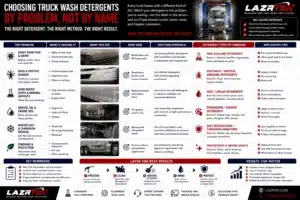
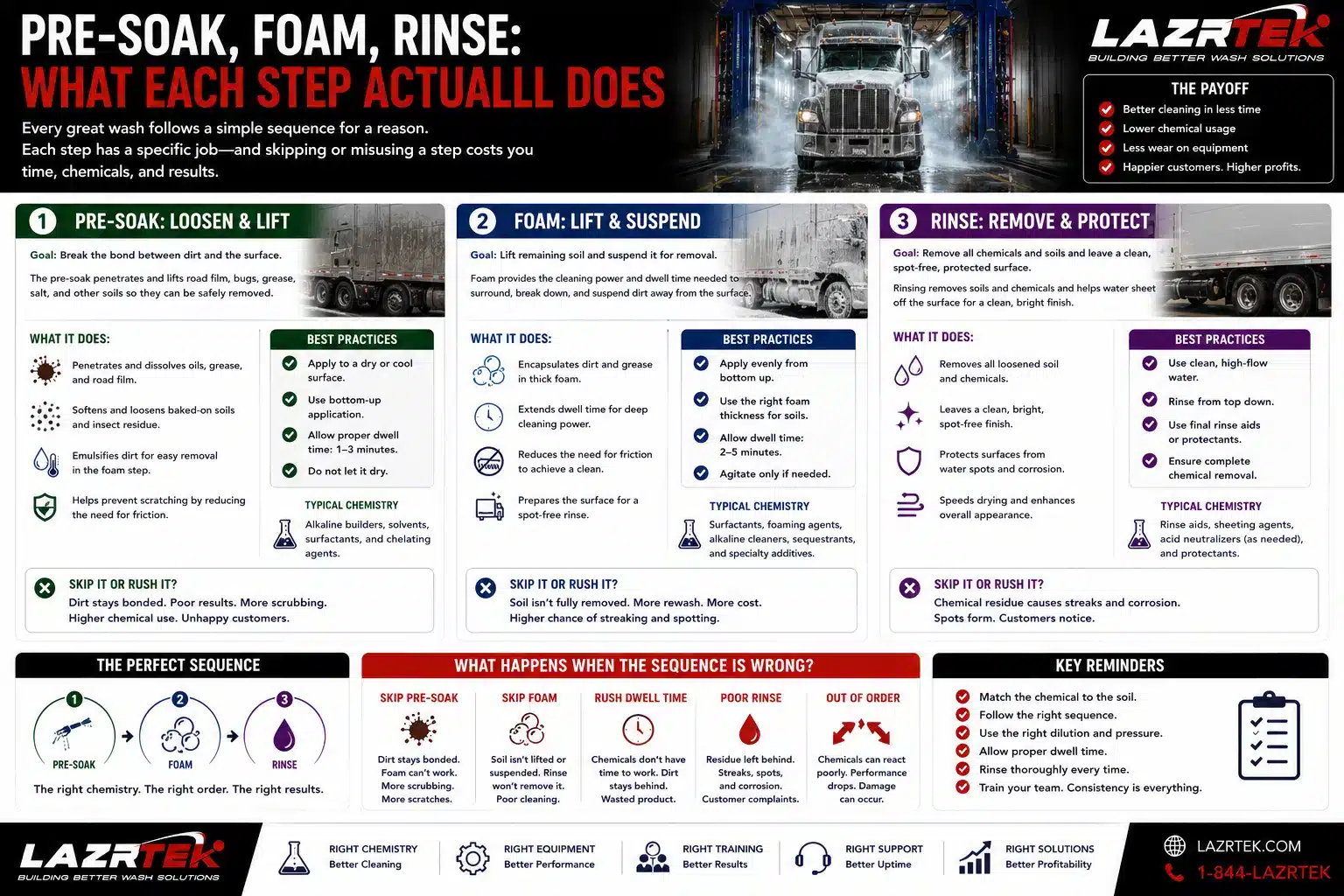
To a driver, a wash is water and suds. To an operator, it’s a relay race where each chemical stage hands off to the next — and any dropped baton shows up as rewash, complaints, or chemical overspend. Here’s what each leg actually does.
Pre-soak: the door-opener
First chemistry on the vehicle, a penetrant like LZR-103 Pre-Soak whose job is to loosen the bond between soil and surface. It doesn’t remove much itself — it makes removal possible, which is why skipping it forces every later stage to work harder and richer.
Foam: dwell is the job
A high-cling foam such as LZR-102 Heavy Foam exists to keep active chemistry in contact with vertical surfaces long enough to emulsify grease and film. Thickness isn’t showmanship — it’s contact time made visible. In two-step programs, this is where the pH sequence does its lifting.
Rinse: removal, not decoration
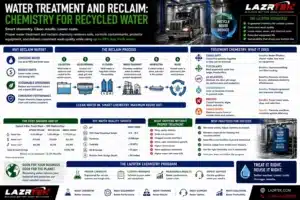
High-pressure rinse carries the emulsified soil away. Water quality decides whether it finishes clean or leaves mineral spotting — the reason water treatment chemistry is part of the lineup, not an accessory.
Protectant: the finish that lingers
A drying agent and protectant like LZR-106 sheets water off, speeds exit, and leaves a layer that slows next week’s film from bonding — the stage customers notice three days later.
The relay only works tuned as a whole: sequence, dilution, dwell. That tuning is the chemical program.