Modern washes recycle water because the economics and the stewardship both demand it — a fraction of fresh-water draw per wash instead of a torrent. But reclaim only works as well as its chemistry: recycled water is a living system, and untreated it turns on you.
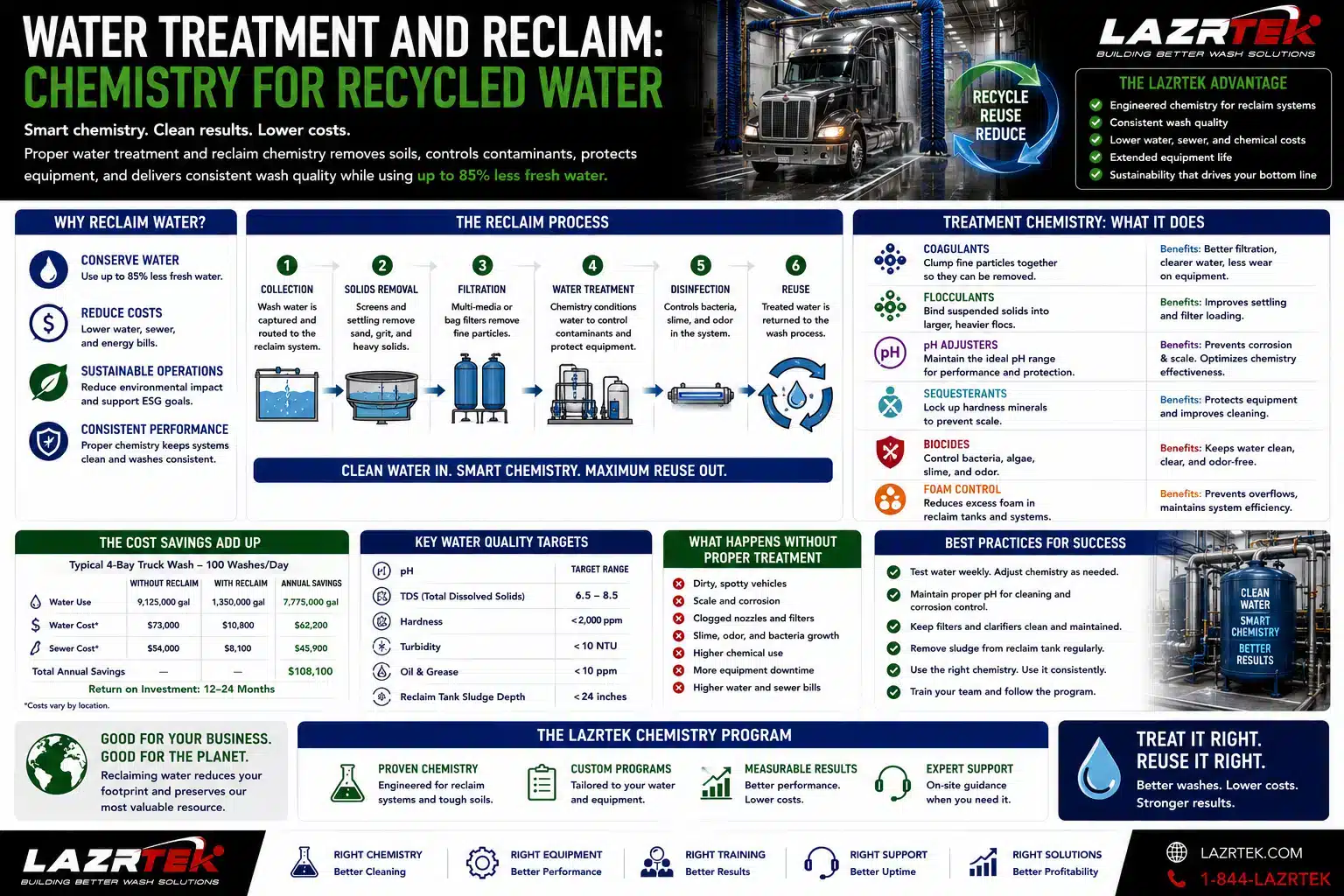
What goes wrong without treatment
Recycled water accumulates solids, oils, detergent residue, and biology. Left unmanaged it spots the finish, smells like a swamp in August, scales the pumps and nozzles, and quietly degrades every wash that uses it. The complaint says “bad wash”; the cause is bad water.
What the chemistry does
Reclaim treatment like the LazrTek water treatment line keeps recycled water clean, clear, and odor-free; protects pumps and plumbing from scale and corrosion; and spot-free rinse chemistry delivers the finish customers judge you by even from hard or recycled supply. It’s the difference between reclaim as a saving and reclaim as a slow-motion problem.
The stewardship dividend
Water efficiency is increasingly a permit conversation and a community one — the EPA\u2019s WaterSense program reflects where commercial water expectations are heading. A wash that documents low fresh-water use per vehicle has an easier story with municipalities and fleet sustainability officers alike.
Treat it as one system
Wash chemistry and water chemistry interact — detergent choices affect reclaim load, water quality affects detergent performance. The chemical program tunes both together, which is the only way either works right.