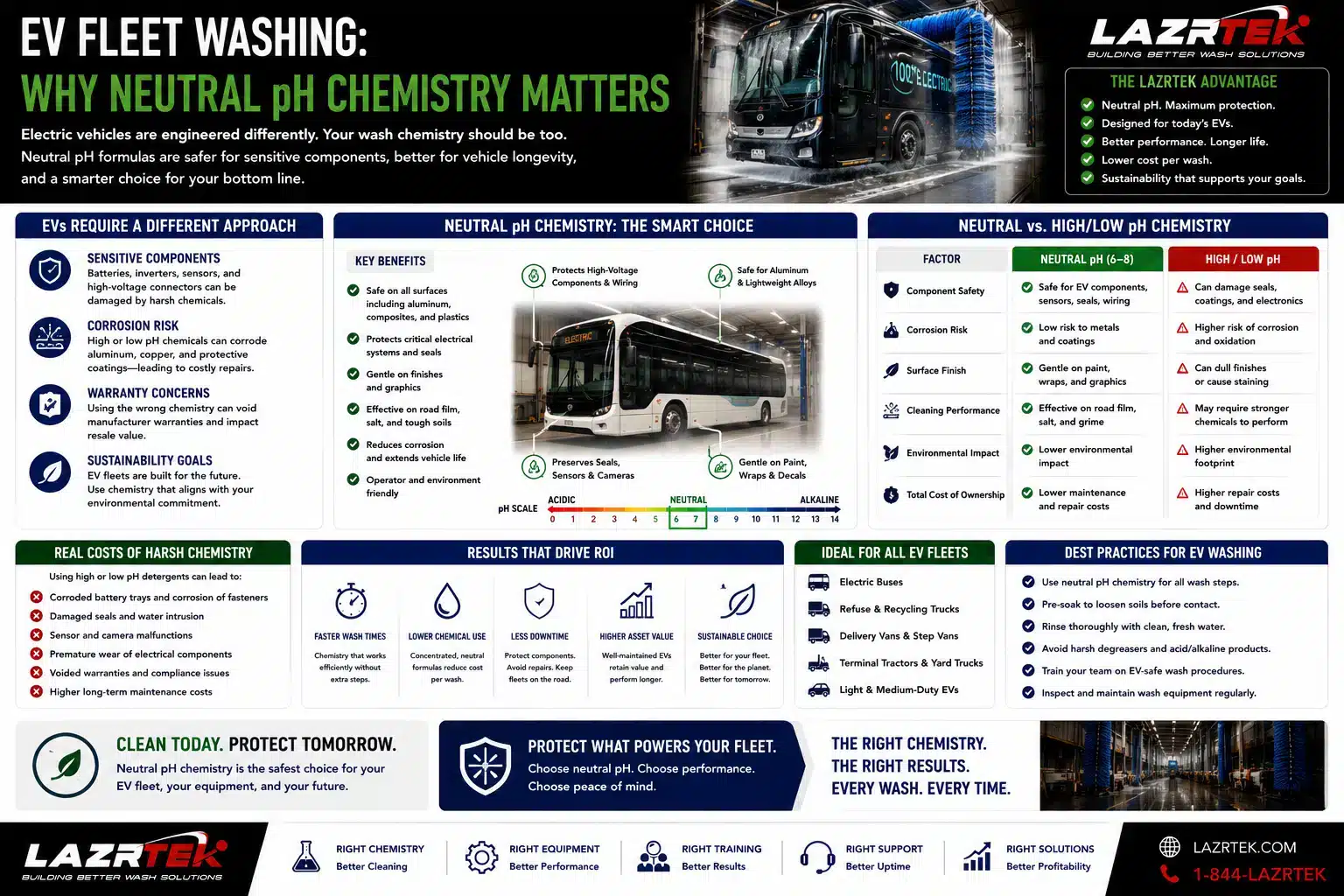
Electric trucks are arriving in fleets faster than wash programs are adapting to them. The vehicles bring a different washing problem: more sensors and cameras, exposed high-voltage connectors, battery enclosures, and mixed-metal construction — all of which make aggressive chemistry a liability rather than a shortcut.
What changes with EVs
Federal fleet-electrification resources like the DOE\u2019s Alternative Fuels Data Center track how quickly commercial EVs are scaling — and every one of them still gets road film. What changes is tolerance: harsh high-alkaline or acid chemistry can degrade seals, haze sensor housings, and attack the aluminum and copper the drivetrain depends on. The truck needs cleaning; the components need protecting. Both at once.
The chemistry answer
Neutral and low-pH formulas — LZR-105 Neutral pH Foam and metal-safe cleaners like LZR-109 — clean effectively while staying gentle on sensitive metals, coatings, and components. For mixed fleets running diesel and electric through the same bay, standardizing on metal-safe chemistry means one program that’s safe for everything.
Touchless pairs naturally
No-contact washing plus neutral chemistry is the lowest-risk EV combination — which is why touchless systems and EV-safe programs are usually specified together for electrifying fleets.
Get ahead of the transition
Fleets signing wash contracts increasingly ask the EV question. Having the program answer ready is a competitive edge that costs a product swap.