A pro forma is a story told in numbers, and lenders are professional critics of that genre. They’ve seen the optimistic version of your spreadsheet before — so the pro forma that gets funded is the one where every line can answer the question “why do you believe that?”
The lines that get scrutinized
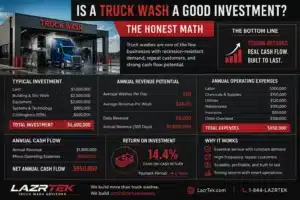
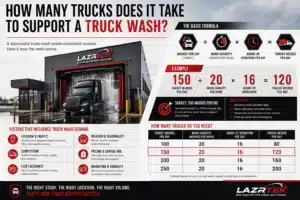
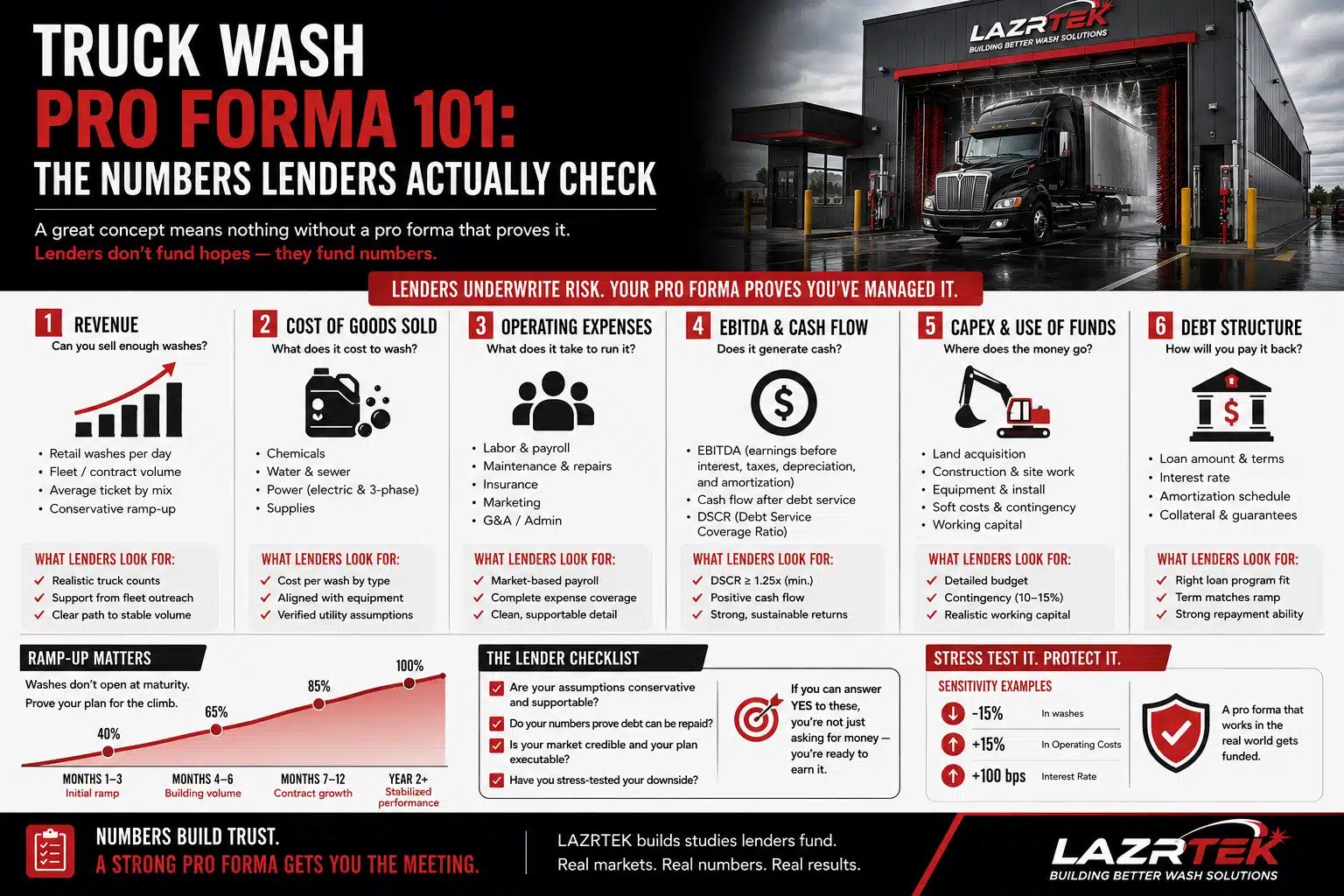
Revenue build-up. Not a single number but a construction: washes per day × average ticket, split by retail vs. contract, ramped month by month. Lenders check whether the mature-state volume is defensible against corridor data and whether the ramp is honest.
Average ticket. Defensible means benchmarked against the actual competitive set in the radius — priced services, washout tickets, add-ons — not against a national figure.
Chemical cost per wash. The line that separates operators from optimists. It’s a function of dosing discipline and program design; our chemical program exists in large part because this number drifts upward at unmanaged washes.
Labor model. Modern automated washes run on one attendant per shift. A pro forma staffed like a full-service detail shop signals the developer hasn’t operated one.
Debt service coverage. The ratio lenders live by: cash flow against the payment, with headroom. Structuring the stack so the ratio holds in the downside case is the core craft of wash business planning and financing — and programs like the SBA 504, with long fixed terms on fixed assets, exist precisely to make that ratio work.
Where the numbers come from
A pro forma is only as good as its inputs, and the inputs come from the feasibility study — corridor counts, competitive pricing, anchor demand. When the study and the pro forma are built by the same team, the lender sees one consistent story instead of a stapled-together deal. That consistency, more than any single number, is what gets projects funded.
Connect the revenue model to complete project costs, debt service, and combined downside cases in the truck wash financial sensitivity guide.