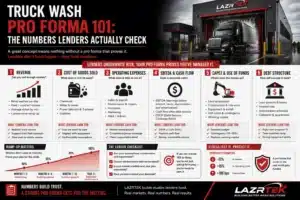
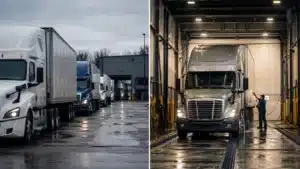
Trucking is one of the few industries where the customer base is enormous, the need is recurring, and the service can’t be done remotely. The Bureau of Transportation Statistics tracks the freight economy that keeps millions of trucks moving — and every one of those trucks gets dirty on a schedule. That’s the foundation of the investment case.
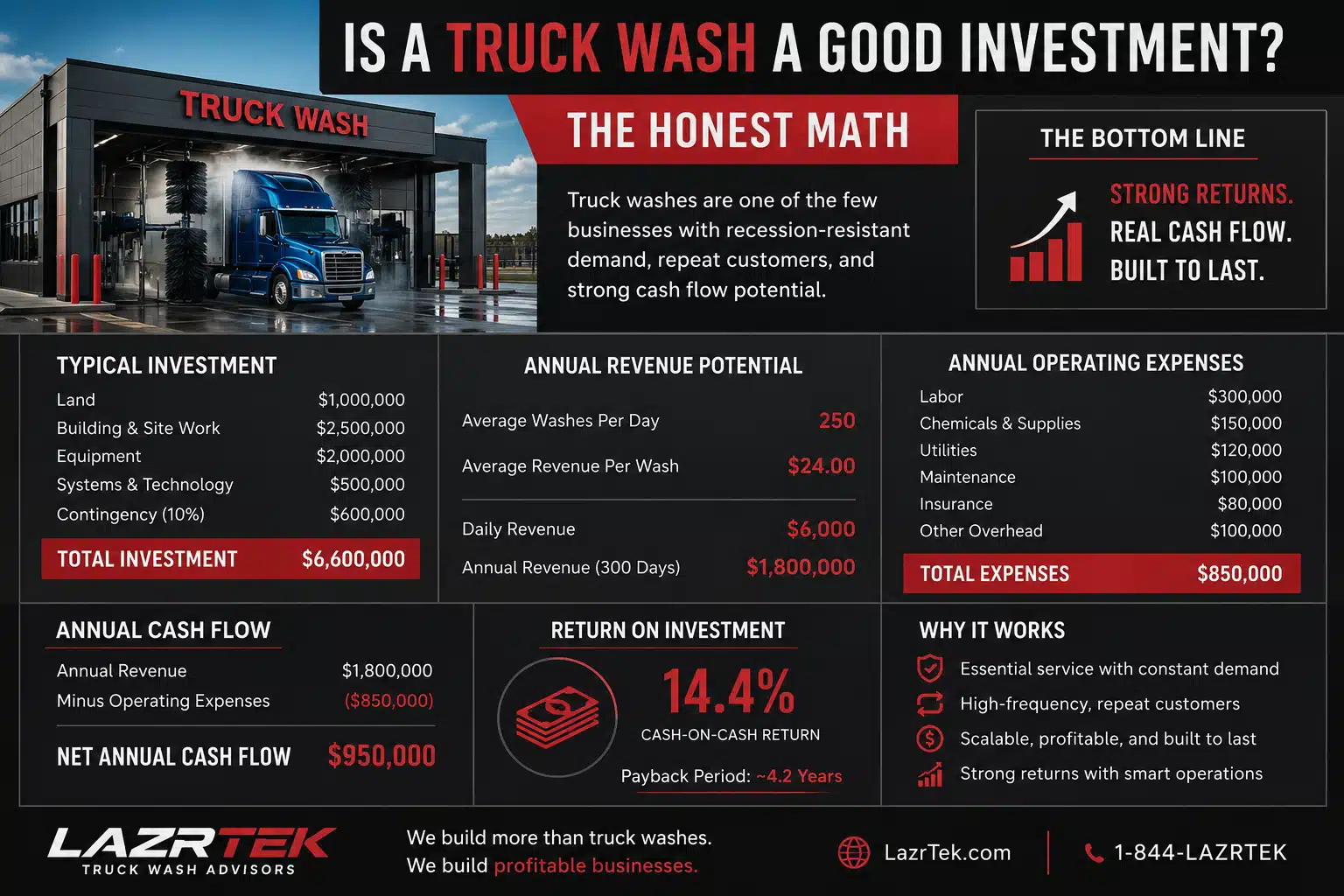
What makes the model attractive
Three things, structurally. First, demand recurs — road film, bugs, and DEF residue come back every week, and food-grade carriers are required to wash out. Second, revenue can be contracted: fleet accounts and depot agreements turn a retail business into a base of recurring commercial revenue. Third, the operating model is lean — a modern automated wash runs on one attendant per shift, which keeps labor, the industry’s most punishing cost line, structurally low.
What kills returns
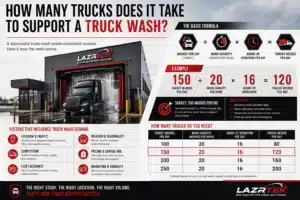
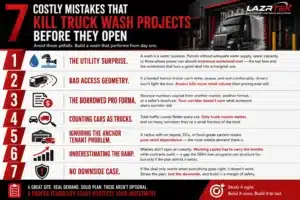
The same three things, inverted. Demand recurs only if the trucks are actually there — a wash on the wrong corridor starves regardless of equipment quality. Contracts only materialize if someone systematically pursues them; drive-by retail alone rarely fills a pro forma. And the lean operating model only holds if the equipment is specified, dosed, and maintained correctly — an under-maintained wash quietly converts its margin into service calls and rework.
The honest answer
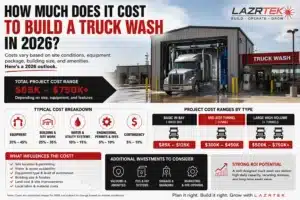
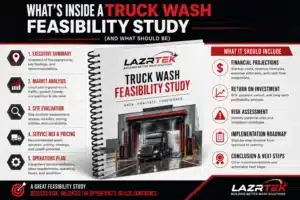
A truck wash is a good investment conditionally — on the site, the format, the contracts, and the operating discipline. The way to test those conditions before committing capital is a feasibility study built to an investment standard: corridor traffic counts, competition mapping, a defensible revenue model, and a budget that survives contact with the parcel. Our own conviction test is simple — in select projects LazrTek invests its equipment as equity, and we only do that when the study math clears the bar we’d apply to our own money. You can see how real projects have performed in our project case studies.