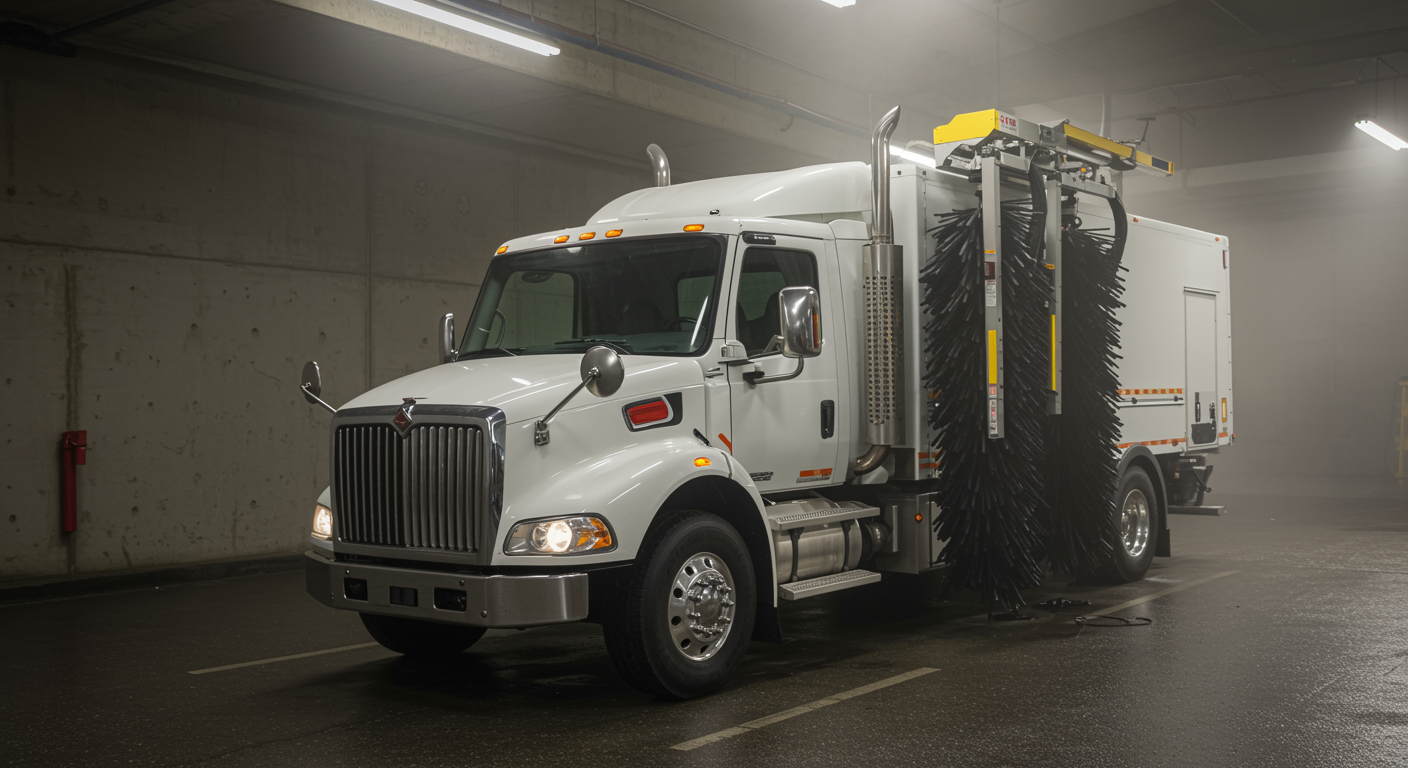
Selecting the right truck wash equipment is a critical decision that directly impacts your operational efficiency, budget, and brand image. A clean fleet not only looks professional but is also easier to maintain and safer on the road. With various options available, from manual pressure washers to sophisticated automated truck wash systems, making the right choice can feel overwhelming. The best solution is not one-size-fits-all; it depends entirely on your unique operational needs.
This guide will walk you through the essential factors to consider when choosing truck wash equipment. We will explore how to assess your fleet’s specific requirements, compare different system types, and make an investment that delivers long-term value. By understanding these key elements, you can select a fleet cleaning solution that streamlines your processes and boosts your bottom line.
Assess Your Fleet’s Unique Profile
Before you can compare different types of equipment, you must first develop a clear picture of your fleet’s characteristics and washing needs. A thorough assessment is the foundation for making a smart investment.
Fleet Size and Wash Volume
The number of vehicles you operate is the most significant factor in determining the right type of wash system.
- Small Fleets (1-15 trucks): A small fleet with infrequent washing needs might manage with a high-quality manual pressure washing setup. However, as labor costs rise, even small operations can benefit from a compact, automated gantry system to improve consistency and save time.
- Medium Fleets (15-50 trucks): At this size, manual washing becomes a serious operational bottleneck. The time and labor costs quickly add up, making an automated system a much more viable option. A rollover/gantry system or a basic drive-through system can provide significant efficiency gains.
- Large Fleets (50+ trucks): For large-scale operations, a high-throughput, automated drive-through system is almost always the most effective choice. The ability to wash a truck in minutes is essential for maintaining fleet availability and keeping operations moving smoothly.
Vehicle Types and Configurations
Your fleet is likely not uniform. Consider the different types of vehicles that will need washing.
- Standard Tractor-Trailers: Most automated systems are designed to handle standard semi-trucks and trailers.
- Irregular Shapes: Do you have tankers, car carriers, garbage trucks, or vehicles with specialized equipment? Some systems, particularly touchless ones, are better at cleaning non-standard shapes. Brush systems with contouring technology can also adapt to different vehicle profiles.
- Delicate Surfaces: If your trucks have expensive custom graphics, wraps, or polished aluminum, a touchless system may be preferable to avoid any potential for abrasion. Alternatively, modern soft-touch brush systems use non-abrasive materials that are safe for most finishes.
Operational Goals and Priorities
What are you trying to achieve with a new wash system?
- Speed and Throughput: Is your main goal to reduce vehicle downtime and wash as many trucks as possible each day? If so, a drive-through system is your best bet.
- Cost Reduction: Are you focused on cutting long-term costs related to labor, water, and detergents? Look for automated systems with water reclamation and precise chemical metering.
- Wash Quality and Consistency: If achieving a perfect, uniform clean on every vehicle is your top priority, an automated system with advanced sensor technology will outperform manual methods.
Comparing Truck Wash Equipment Options
Once you have a clear profile of your needs, you can evaluate the primary types of truck wash equipment available on the market.
Manual Pressure Washing Systems
This is the most basic setup, involving handheld pressure washers, brushes, and manual labor.
- Best for: Very small fleets, occasional deep cleaning, or businesses with a very limited initial budget.
- Pros: Low upfront cost, ability to detail specific problem areas.
- Cons: Extremely labor-intensive, slow, inconsistent results, high water and chemical usage, and potential for improper wastewater runoff.
Gantry (Rollover) Systems
In a gantry system, the truck parks in a wash bay, and a robotic unit moves back and forth over the vehicle to perform the wash cycles.
- Best for: Small to medium-sized fleets, facilities with limited space, and operations with a mix of vehicle types.
- Pros: Requires a smaller footprint than a drive-through system, provides a thorough and consistent wash, can be operated by a single person.
- Cons: Slower throughput than a drive-through system, as only one vehicle can be washed at a time.
Drive-Through Systems
These systems consist of a series of arches that a truck drives through slowly. Each arch performs a specific function, such as pre-soaking, high-pressure washing, brushing, rinsing, and waxing.
- Best for: Large, high-volume fleets where speed and efficiency are paramount.
- Pros: Extremely fast throughput (washing a truck in minutes), highly efficient, capable of handling a continuous flow of vehicles.
- Cons: Requires a larger physical footprint and a higher initial investment.
Touchless vs. Friction (Soft-Touch) Systems
Within automated options, you’ll need to decide between touchless and friction-based cleaning.
- Touchless Systems: Rely entirely on high-pressure water jets and specialized chemical detergents to remove dirt. They are excellent for protecting delicate surfaces and cleaning irregular shapes. However, they may struggle with removing heavy, caked-on road film without aggressive chemicals.
- Friction (Soft-Touch) Systems: Use large, rotating brushes made of a soft, non-abrasive material to gently scrub the vehicle’s surface. This physical agitation is highly effective at removing stubborn grime. Modern brush technology is safe for almost all vehicle finishes and provides a superior clean.
- Hybrid Systems: The best of both worlds. These systems combine high-pressure touchless washing for sensitive areas with soft-touch brushes for flat surfaces, delivering a comprehensive clean.
Case Study: Choosing the Right Fit for Growth
A regional food distributor with a fleet of 40 refrigerated box trucks was struggling with their manual wash process. It took two workers nearly an hour per truck, creating a constant backlog and delaying departures. After assessing their needs, they realized their priority was speed and consistency. They chose to invest in a compact, automated drive-through system.
The results were immediate. Wash time per truck dropped to under 15 minutes, and the process could be managed by a single employee. The company was able to wash every truck weekly instead of monthly, improving brand perception and food safety compliance. The fleet manager noted that the reduction in labor costs alone resulted in a full return on their investment in just under two years.
Key Considerations for Your Investment
Beyond the type of system, consider these crucial features:
- Water Reclamation: A water recycling system can cut water consumption by up to 80%, leading to massive utility savings and a more sustainable operation.
- Undercarriage Wash: Essential for removing corrosive salt and de-icing agents that can destroy a truck’s chassis.
- Chemical and Wax Application: Automated systems ensure the precise application of detergents and protective waxes, improving results and preventing waste.
- Service and Support: Choose a manufacturer with a reputation for reliability, quality installation, and readily available technical support and parts.
Making the right choice in truck wash equipment is a strategic decision that pays dividends for years to come. By carefully analyzing your fleet size, vehicle types, and operational goals, you can select a system that improves efficiency, reduces costs, and keeps your fleet looking its best.
To get expert guidance on finding the perfect fleet cleaning solution tailored to your business, explore How to Choose the Right Truck Wash Equipment for Your Fleet and discover how LazrTek’s innovative technology can drive your success.
Helpful Resources
- NATSO (National Association of Truck Stop Operators): Offers insights into industry trends and best practices for fleet services.
- American Trucking Associations (ATA): The leading resource for trucking industry news, advocacy, and operational guidelines.