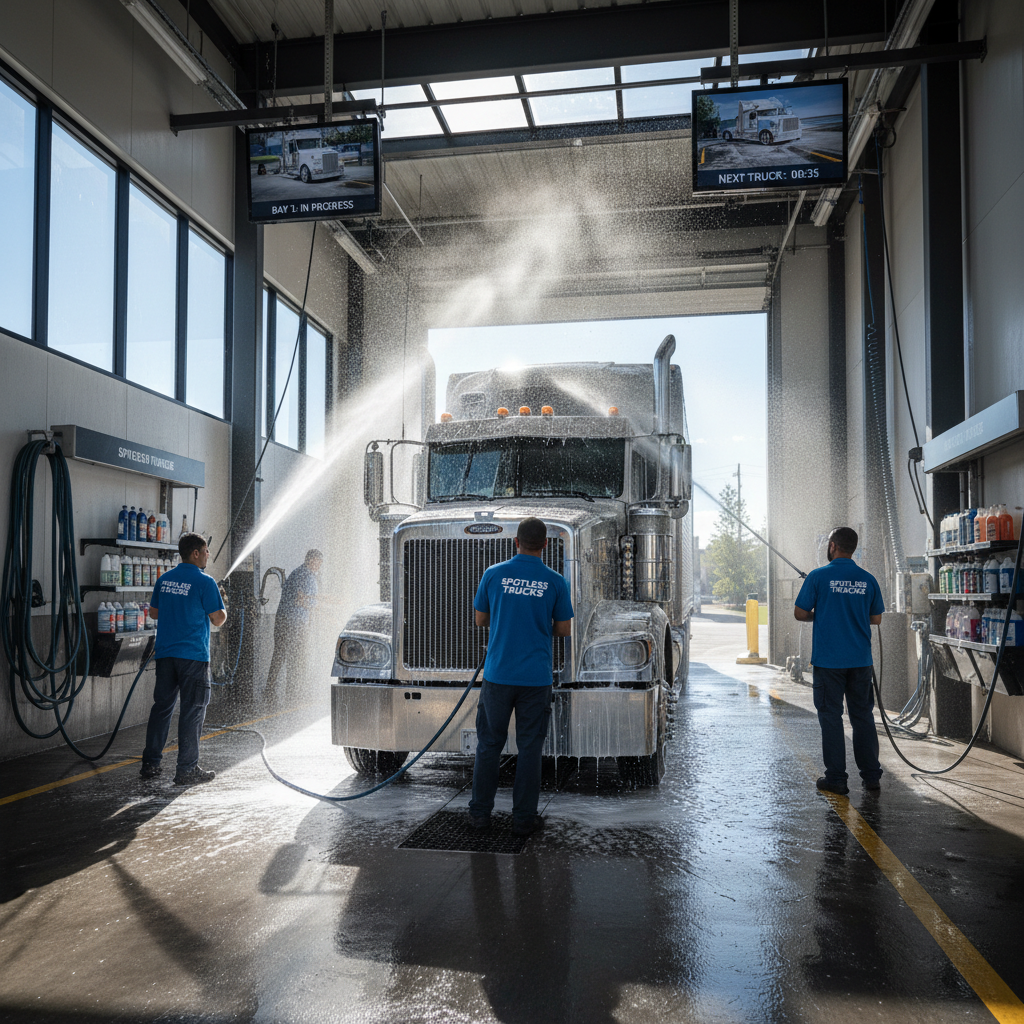
Selecting the right equipment to keep a fleet clean is a pivotal decision for any transportation manager. The market offers several distinct technologies, each with its own philosophy on how to remove dirt, grease, and road salt from heavy-duty vehicles. Making the wrong choice can lead to high operational costs, inadequate cleaning, or even vehicle damage.
Understanding the core differences between friction, touchless, and hybrid systems is the first step toward a sparkling fleet and a protected bottom line. This guide breaks down the primary types of truck wash equipment, examining their strengths, weaknesses, and ideal applications, while highlighting how LazrTek is innovating in each category.
1. Friction Wash Systems (Brush Washes)
Friction systems are the workhorses of the vehicle wash industry. They utilize rotating brushes made of soft cloth or foam to physically agitate the surface of the truck. This mechanical action, combined with water and soap, scrubs away dirt.
How It Works
Large vertical and horizontal brushes spin against the vehicle’s surface as it moves through the wash bay (or as the gantry moves over the parked vehicle). Sensors detect the shape of the truck to ensure the brushes apply the correct amount of pressure.
Pros and Cons
- Pros:
- Superior Cleaning Power: The physical scrubbing action is unmatched for removing “road film”—the thin, oily layer of grime that high-pressure water alone often leaves behind.
- Lower Chemical Cost: Because the brushes do the heavy lifting, these systems typically require less aggressive (and less expensive) chemicals.
- Polishing Effect: Soft-touch materials can actually buff the vehicle’s surface, enhancing shine over time.
- Cons:
- Risk to Accessories: Mirrors, antennas, and protruding lights can be damaged if the equipment is not properly calibrated or if the driver does not prepare the vehicle correctly.
- Shape Limitations: Friction systems struggle with irregular shapes, such as tanker trucks with complex piping or garbage trucks with odd protrusions.
Ideal Use Case
Friction washes are perfect for fleets consisting primarily of box trucks, trailers, and buses with flat, smooth surfaces.
The LazrTek Advantage
LazrTek friction systems utilize Smart-Sense Technology. Our brushes constantly monitor torque and pressure, adjusting in real-time to the contour of the vehicle. This minimizes the risk of damage while maximizing cleaning coverage. We use closed-cell foam materials that resist harboring grit, preventing the scratching often associated with older bristle brushes.
2. Touchless Wash Systems
As the name implies, touchless systems clean without any solid object touching the vehicle. They rely on a combination of high-impact water pressure and specialized chemical reactions to lift and rinse away dirt.
How It Works
The system applies a low-pH acid step followed by a high-pH alkaline step. This chemical reaction loosens the static bond of dirt on the paint. High-pressure oscillating nozzles (often running at 1,000+ PSI) then blast the loosened grime off the surface.
Pros and Cons
- Pros:
- Safety for Irregular Shapes: Since nothing touches the vehicle, you can safely wash tankers, tractors with headache racks, and heavy equipment with complex geometries.
- Zero Scratch Risk: There is no risk of brush-induced swirl marks or damage to mirrors and antennas.
- Low Maintenance: With fewer moving parts (no spinning brushes), mechanical maintenance is often simpler.
- Cons:
- Chemical Dependency: Performance relies heavily on the quality and concentration of chemicals. This can drive up the cost per wash.
- Road Film Issues: In some cases, touchless systems may struggle to remove 100% of the heavy, oily road film that accumulates over long hauls.
Ideal Use Case
Touchless systems are the go-to choice for mixed fleets that include tankers, flatbeds with irregular loads, or vehicles with many external accessories.
The LazrTek Advantage
LazrTek’s touchless systems feature Precision Dosing pumps. We ensure you use the exact amount of chemical needed for the specific soil level of the truck, reducing waste. Our “High-Velocity Impingement” nozzles maintain pressure over greater distances, ensuring the water hits the truck with cleaning force, not just mist.
For more on the chemistry behind cleaning without friction, resources like Cleaner Times offer in-depth technical analysis on industrial detergents.
3. Hybrid Wash Systems
Why choose between safety and power when you can have both? Hybrid systems combine the best features of friction and touchless technologies into a single wash bay.
How It Works
A hybrid wash usually starts with a high-pressure rinse to remove heavy sand and grit (which could scratch paint if caught in a brush). It then utilizes brushes for the flat surfaces (sides and rear) to scrub away road film, while using high-pressure touchless sprayers for hard-to-reach areas or delicate zones.
Pros and Cons
- Pros:
- Maximum Versatility: You get the deep clean of a brush wash and the safety of a touchless wash.
- Customizable: Operators can program the machine to lift brushes for a tanker and lower them for a box truck within the same queue.
- Cons:
- Complexity: These systems are mechanically more complex, which can mean a higher initial investment and potentially more maintenance points.
- Space Requirements: They may require slightly longer wash bays to accommodate both sets of hardware.
Ideal Use Case
Hybrid systems are ideal for commercial truck washes that service the public, or large private fleets with a diverse mix of vehicle types that require a showroom-quality finish.
The LazrTek Advantage
LazrTek hybrid models are built on a Modular Gantry platform. This allows you to configure the sequence of friction and high-pressure modules to suit your specific fleet mix. Our intelligent control systems switch seamlessly between modes, ensuring efficient throughput without manual intervention.
4. Drive-Through vs. Gantry Styles
Beyond the cleaning method (brush vs. touchless), you must also consider the movement style.
- Rollover (Gantry) Systems: The truck parks, and the machine moves over it. This is excellent for smaller spaces and lower volumes (10-30 trucks per day). It offers a very thorough, precise clean.
- Drive-Through Systems: The truck drives slowly through a stationary tunnel of equipment. This is the king of speed, capable of washing 60+ trucks per hour. It is essential for large fleets that need to turn vehicles around quickly.
According to the Technology & Maintenance Council (TMC), minimizing vehicle downtime is a top priority for fleet maintenance managers. Choosing a high-throughput drive-through system can recover hundreds of hours of driver time annually compared to slower methods.
Conclusion
There is no single “best” truck wash system; there is only the best system for your specific fleet.
- Choose Friction if you have a uniform fleet of box trucks and want the cleanest possible shine.
- Choose Touchless if you haul tankers, operate oddly shaped heavy equipment, or want to eliminate the risk of physical damage.
- Choose Hybrid if you need versatility and won’t compromise on quality.
LazrTek offers industry-leading durability and smart technology across all three categories. We don’t just sell equipment; we help you engineer a wash process that lowers your cost per mile and protects your brand image.
Ready to determine which system fits your fleet? Contact LazrTek today for a site consultation and discover how modern wash technology can transform your maintenance routine.