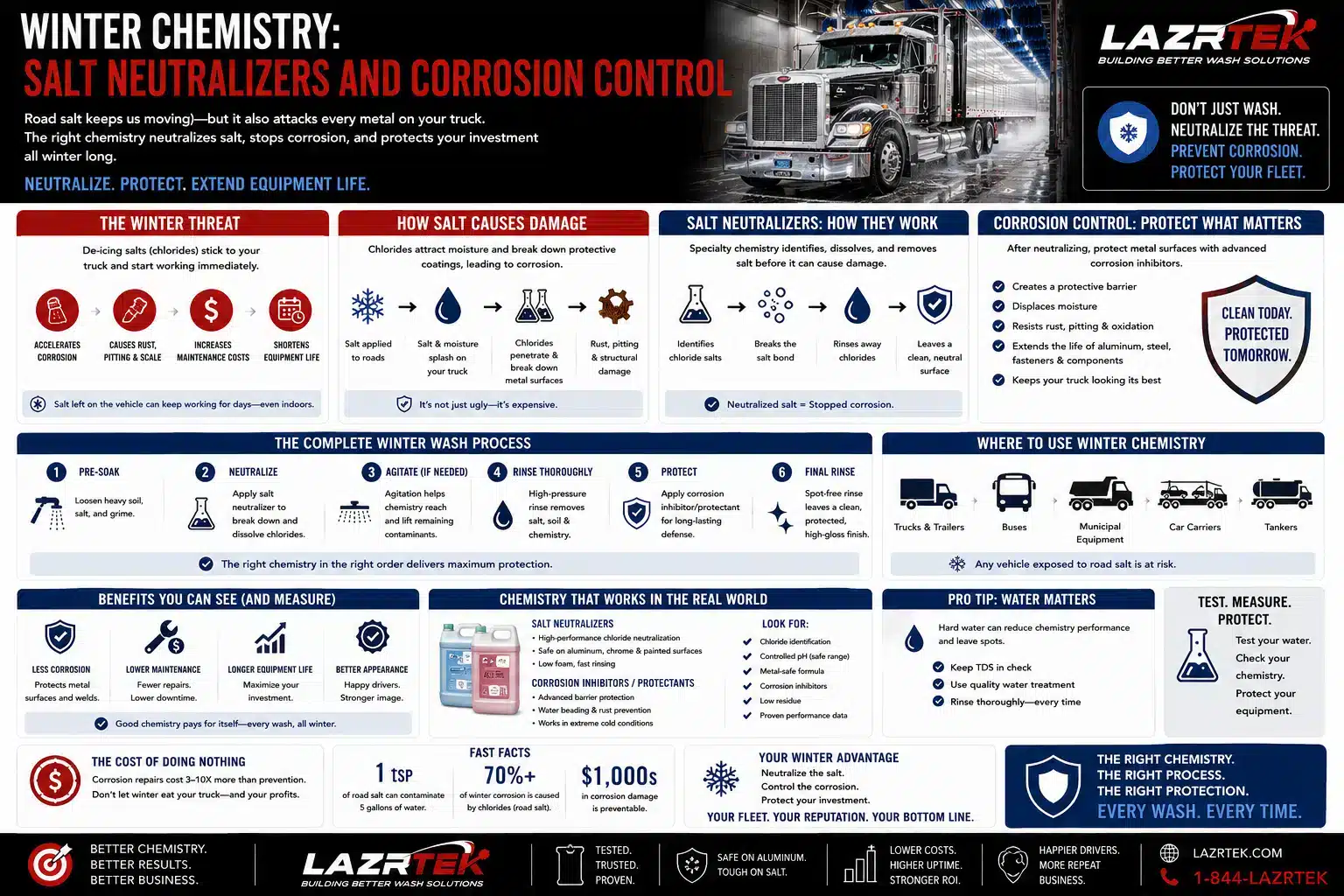
Winter roads are treated with salt and increasingly with liquid brines that cling to vehicles far more tenaciously than rock salt ever did. What protects drivers corrodes trucks — and the corrosion bill arrives years later, on frames, brake lines, connectors, and fittings. Winter chemistry is how a wash sells asset protection, not just appearance.
Why plain water isn’t enough
Chloride residues bond to metal and hide in seams, crossmembers, and connectors where rinse water doesn’t linger. Agencies like the Federal Highway Administration document how extensively modern de-icing is used — meaning every winter mile loads the undercarriage with exactly the residue a surface wash misses.
Neutralize, don’t just rinse
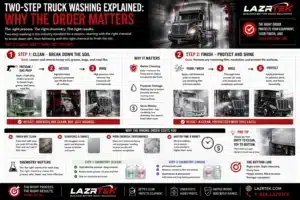
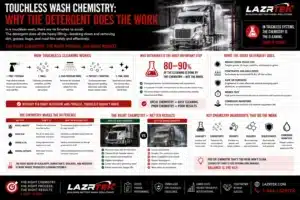
A salt neutralizer like LZR-107 Winter Salt Neutralizer & Protectant chemically breaks down chloride residue and leaves a protective barrier that slows re-accumulation between washes. Paired with high-impact undercarriage washing that reaches frames and wheel wells, it’s the difference between washing for looks and washing for component life.
The winter program sells itself
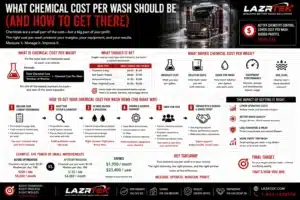
For fleets, the pitch is arithmetic: corrosion shortens component life and raises maintenance spend, and a scheduled winter wash program costs a fraction of what it protects. It’s also counter-seasonal revenue — the months retail washing dips are exactly when fleet corrosion programs should peak.
Set it up right
The chemical program calibrates winter chemistry for your region’s de-icing practices — because a Minnesota program and a Texas program should not look alike.