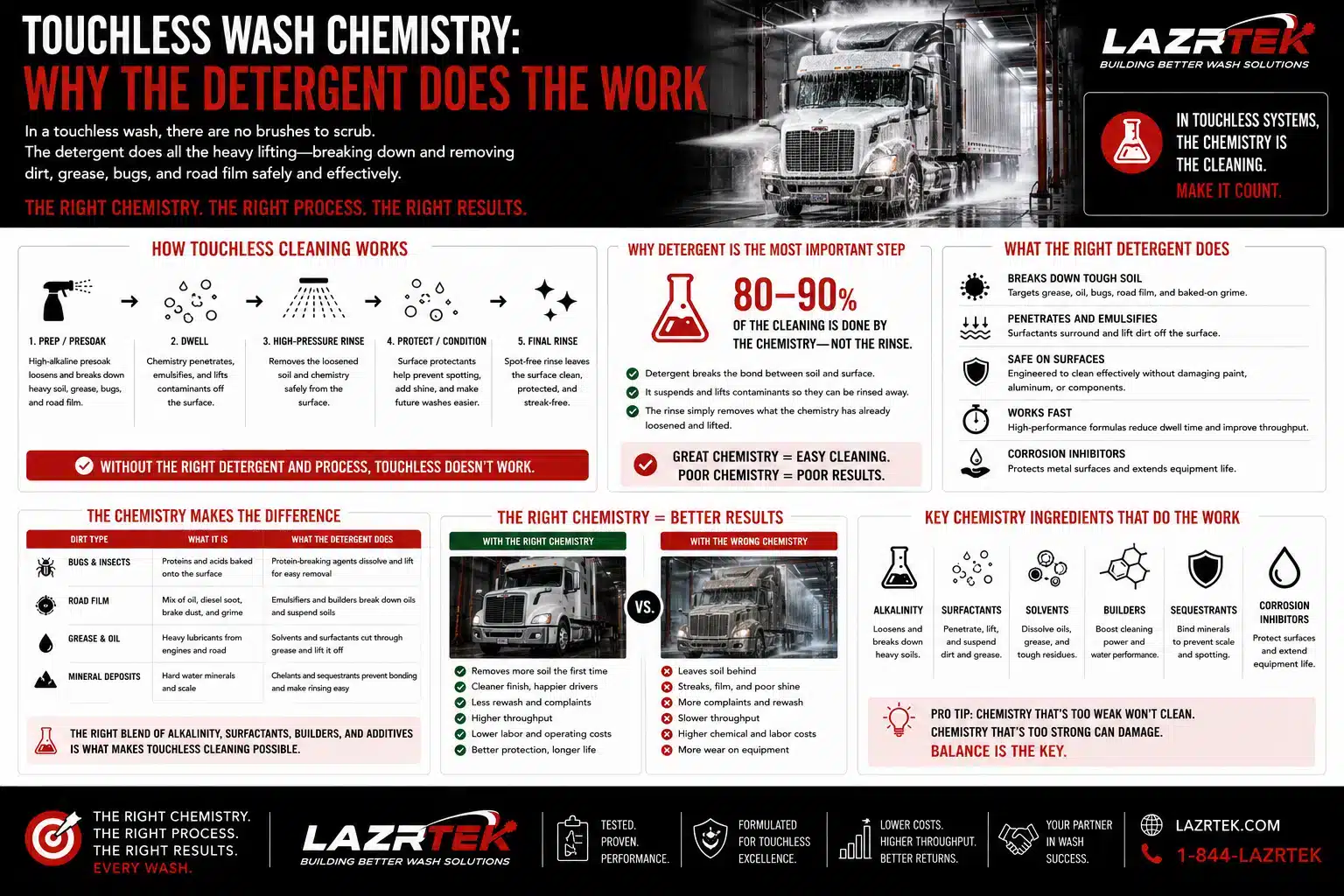
In friction washing, brushes forgive mediocre chemistry. In touchless washing there is no brush — the detergent, the dwell, and the pressure are the entire cleaning system. That’s why touchless results vary so widely between washes running identical equipment: the difference is the program.
Match the chemistry to the soil
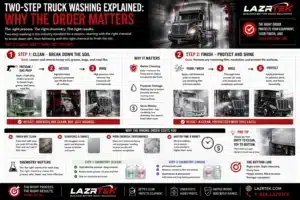
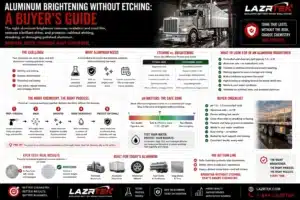
Road film is not one thing. Diesel soot and grease want alkaline attack; mineral film and hard-water deposits want low-pH; bugs and organics want targeted pre-treatment like a dedicated debugger. A touchless program that cleans everything with one product cleans nothing completely.
Dwell is the invisible ingredient
Chemistry needs contact time. Too little and pressure is rinsing off unfinished work; too much on a hot panel and product dries into streaks. High-cling foams exist to buy dwell on vertical surfaces — thickness with a job, not just a show.
Water quality changes everything
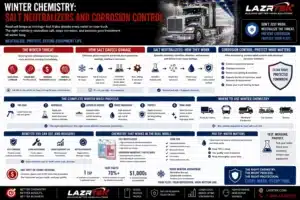
Hardness minerals consume detergent before it touches the truck and leave the spotting drivers complain about. Programs must be calibrated to local water — and paired with treatment and spot-free rinse chemistry where the water demands it.
Systems and chemistry, engineered together
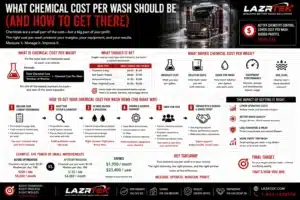
This is why LazrTek treats touchless equipment and the chemical program as one design problem. The machine delivers the chemistry; the chemistry does the cleaning. Specify them together and touchless stops being a compromise.