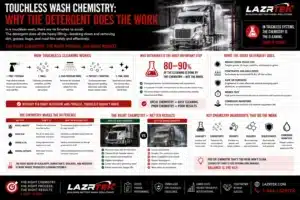
Two-step washing is the chemistry trick that makes touchless cleaning possible: two products, opposite ends of the pH scale, applied in sequence. Each step sets up the other — and the order is the whole point.
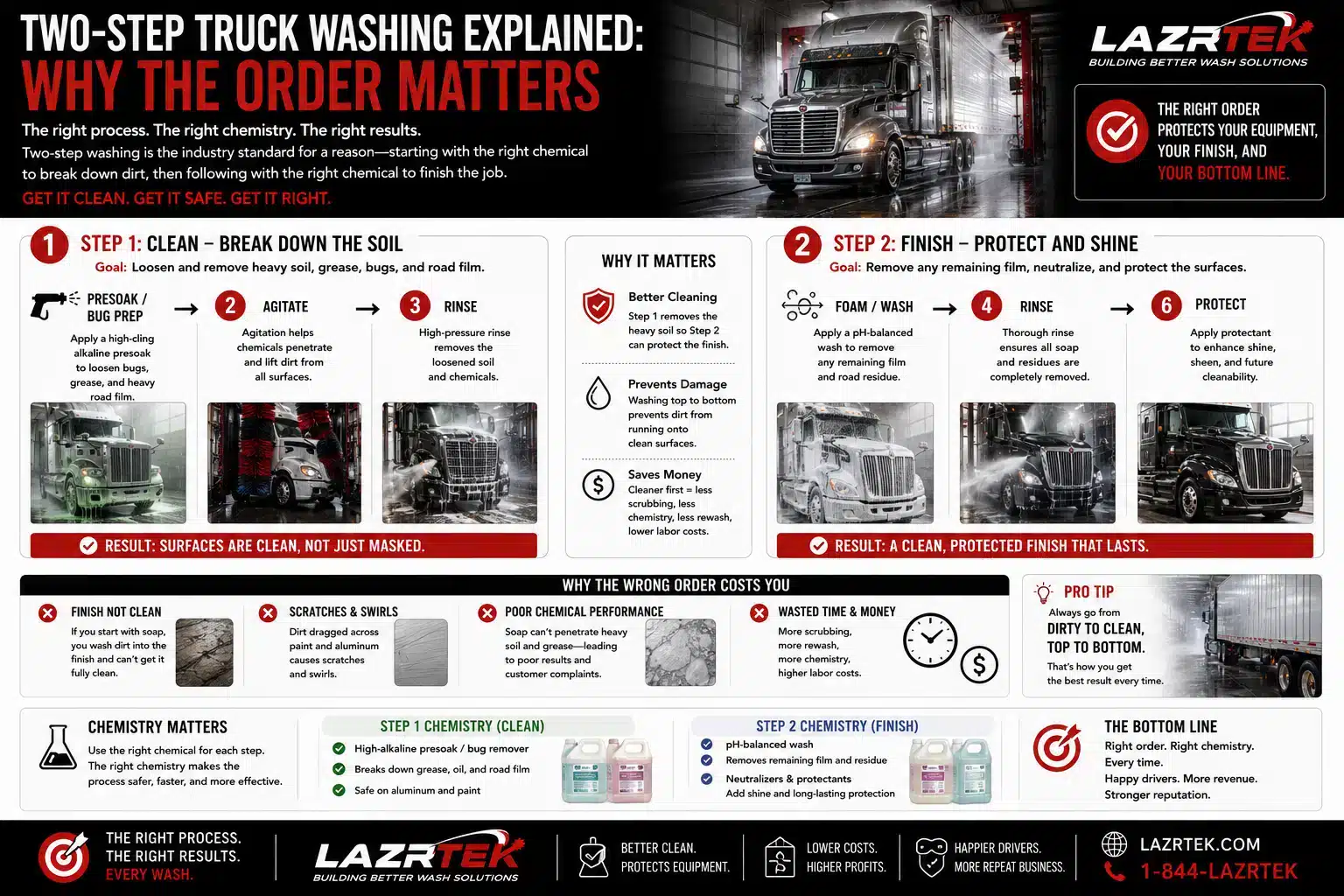
How the sequence works
Step one applies a low-pH product that penetrates and loosens the mineral side of road film — the metallic, inorganic grime bonded to the surface. Step two follows with a high-pH alkaline detergent that emulsifies the organic side: diesel soot, grease, exhaust film. The reaction between steps lifts soils that neither product removes alone, and high-pressure rinse carries it all away — no brush required.
Why order and timing matter
Reverse the steps or let step one dry before step two lands, and you’ve paid for two chemicals to do one chemical’s work. Dwell time is the active ingredient: enough for penetration, not so much that product dries on hot panels. This is why dosing and sequencing are calibrated to your equipment, water, and climate rather than copied off a drum label.
The economics of doing it right
Correct two-step programs clean better at lower total chemical cost — the soil comes off in the rinse instead of requiring rewash. Products like LZR-103 Pre-Soak and LZR-104 Low pH Foam are formulated as sequence partners for exactly this reason.
Calibrated, not just delivered
The LazrTek chemical program sets the sequence, dilutions, and dwell for your specific bay — because two-step done right is a system, and done wrong is just two invoices.