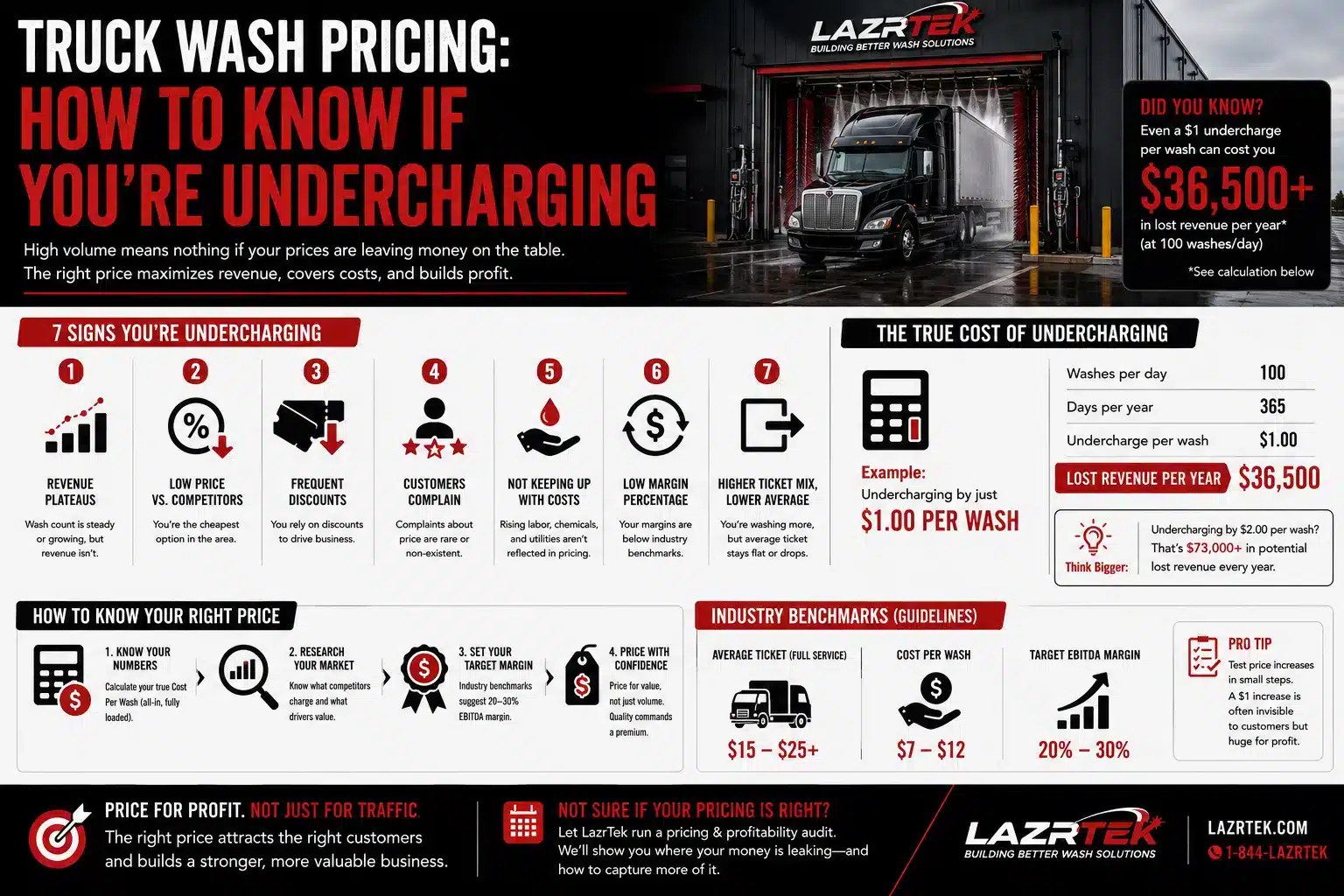
Raising prices frightens operators more than any other lever — and it’s usually the lever with the most money behind it. The fear is losing volume; the math almost always says otherwise.
The benchmark test
Price is only meaningful against the competitive set: every wash in your draw radius, by service, with their add-ons. If you’re materially below market for a comparable service, you’re not “competitive” — you’re subsidizing drivers who would have paid the going rate. A proper survey prices the whole menu, including washouts and add-ons, not just the base wash.
The math of a raise
Run the arithmetic before the anxiety: a meaningful price increase typically survives losing a surprising share of volume before it costs you money — and real-world attrition from a market-aligned increase is usually far smaller than owners fear. Drivers choose washes on speed, quality, and convenience more than single-digit dollar differences.
Fleets are a different conversation
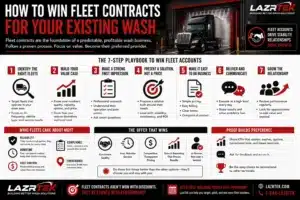
Contract accounts deserve structured pricing — volume tiers, terms, invoicing — rather than the retail board. Done right, a price restructure often raises retail while formalizing fleet rates, which grows both margin and contracted volume at once. The Exit 87 turnaround paired a price restructure with fleet outreach for exactly that reason.
Price with data, not nerve
A wash business audit includes the competitive pricing survey and the elasticity math, so the new board is a calculation instead of a gamble — and the marketing program makes sure the value story reaches the drivers paying it.