Home / Wash Systems / Friction / Brush Wash Systems
Brush-Assisted Cleaning
Brush truck wash systems matched to the fleet.
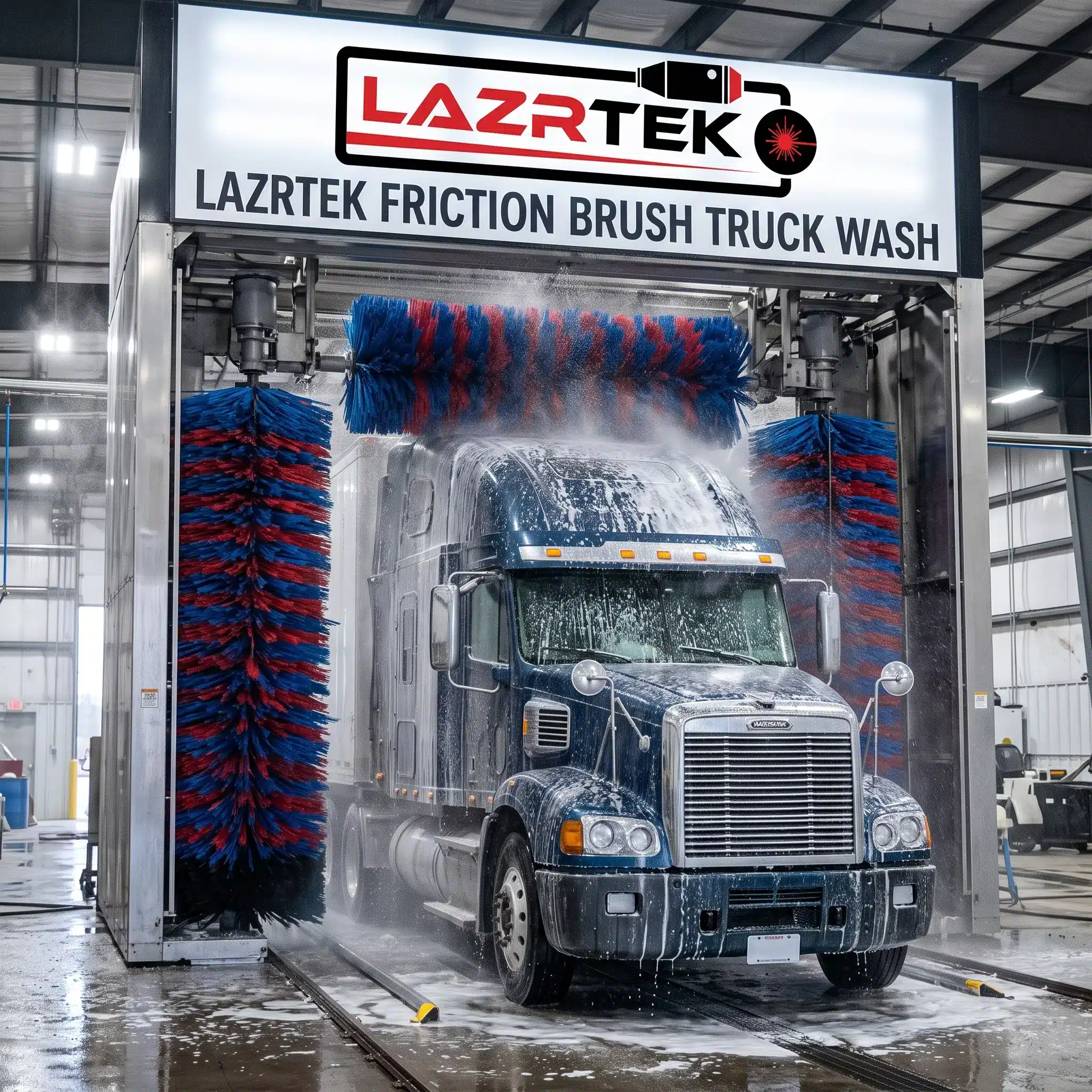
Friction truck wash systems use cleaning brushes as part of the wash process. Selecting a system requires more than comparing brush counts. Confirm vehicle clearances, contact-control methods, wash sequence, maintenance needs, and the conditions under which cleaning performance and throughput are specified.
Ideal For
Who specifies this system
- Uniform fleets washing daily or weekly
- Operators competing on visible shine
- High-volume operations where consistency matters
- Corporate fleets with image standards
Before You Specify
Configuration checklist
| Decision | What to confirm |
|---|---|
| Cleaning method | Brush contact as part of a specified wash and rinse sequence |
| Brush material | Confirm brush material, contact controls and surface compatibility |
| Finish | Evaluate results on representative vehicles and soil conditions |
| Best paired with | Confirm compatible chemistry and required operating procedures |
Before you specify
Six questions for a brush-wash proposal.
A useful proposal connects the equipment configuration to your fleet and site. Request the supporting drawings, operating requirements, and service terms rather than comparing a headline wash speed alone.
| Decision | What to confirm |
|---|---|
| Fleet fit | Document vehicle dimensions, mirrors, cameras, accessories, and irregular loads. Request the permitted vehicle envelope, approach clearances, and any vehicle exclusions for the proposed configuration. |
| Cleaning process | Ask how brush contact is controlled, how exposed equipment is protected, and which surfaces and soil conditions the wash process is designed for. Request a demonstration using representative vehicles where practical. |
| Operating capacity | Compare the stated wash cycle with your actual arrival pattern, positioning time, preparation steps, and staffing. Ask what assumptions the quoted throughput includes. |
| Site and utilities | Request layout drawings and electrical, water, and any compressed-air requirements. Check building access, drainage, equipment access, and site constraints before finalizing the installation plan. |
| Water and chemistry | Confirm chemistry compatibility, handling and dilution instructions, water quality, and discharge requirements. Review the current safety data sheets and site-specific water-treatment or reclaim needs. |
| Ownership and support | Clarify installation, commissioning, training, preventive maintenance, consumables, replacement parts, warranty terms, and service coverage. Identify which costs and responsibilities are excluded from the quote. |
Bring your vehicle list, bay layout, wash schedule, and known utility information to the discussion. Discuss a fleet wash project with LazrTek.
Straight Answers
Friction / Brush Wash Systems FAQ
Will brushes scratch my trucks?
Brush condition, trapped debris, contact settings, chemistry and vehicle condition affect damage risk. Confirm the proposed process with the equipment and vehicle suppliers, including exclusions and maintenance requirements. Do not treat a brush-material description as a no-damage guarantee.
Friction or touchless — which should I buy?
Compare both methods against your actual vehicles, accessories, soils and wash schedule. Review cleaning results, vehicle exclusions, maintenance and total operating cost. A site and fleet assessment is more useful than a universal recommendation.