Plenty of people should own truck washes who should never run one: landowners with the right parcel, investors with the right corridor, fleet operators whose wash bay distracts from their actual business. Contract management separates the two roles cleanly — you hold the asset, professionals hold the operation.
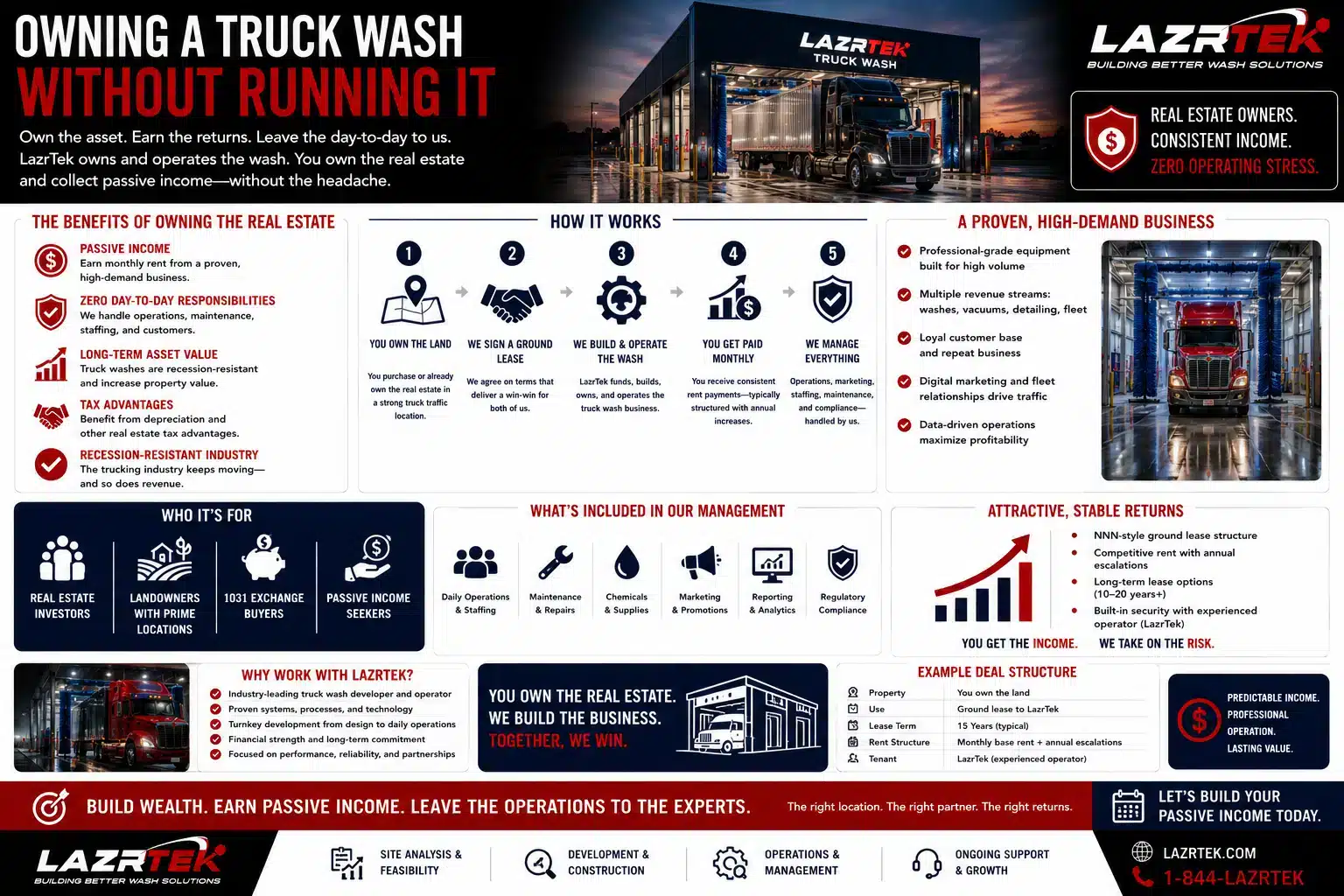
What the operator takes over
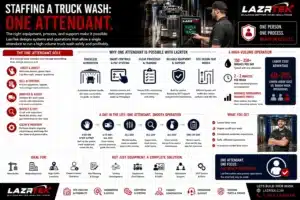
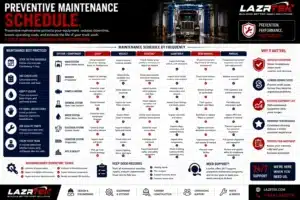
Everything with a schedule: staffing and training, chemical program and dosing discipline, preventive maintenance, vendor management, pricing execution, fleet account service, and the daily open-and-close. The owner’s job compresses to reviewing a report and a distribution.
What the owner keeps
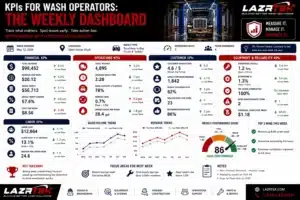
Title, upside, and strategic control — expansion decisions, capital improvements, exit timing. A good management agreement makes the split explicit: operating authority delegated, ownership decisions reserved, performance measured against defined KPIs rather than vibes.
Why specialist management outperforms
A wash run by people who run many washes benefits from pattern recognition a single-site owner can’t accumulate: dosing benchmarks, staffing models, maintenance intervals, pricing data across markets. The result is typically higher margin under management than under distracted ownership — which is what pays the management fee.
Who it fits
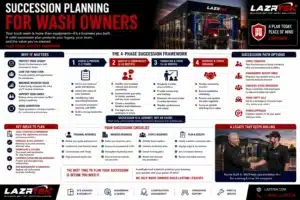
Passive owners, succession-planning operators, and fleets that built a bay for themselves and found it became a job. The LazrTek wash management service runs the model — the day-in-the-life video on that page shows what a managed facility’s week actually looks like — and pairs naturally with ownership structures designed for passive capital.